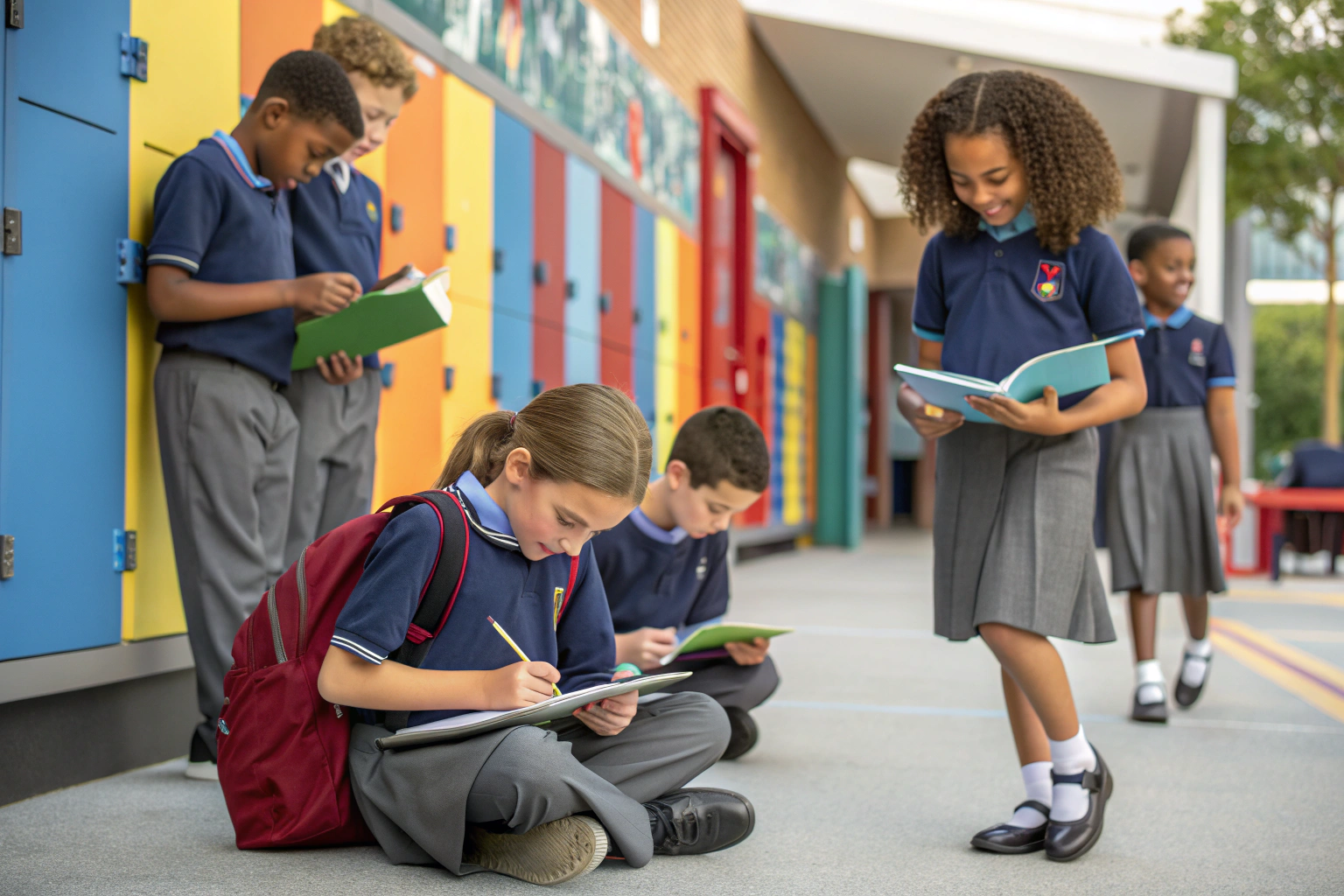
As a children’s clothing manufacturer who has produced school uniforms for educational institutions across North America and Europe, I’ve learned that creating effective school uniforms requires balancing institutional requirements with practical childhood needs. School uniforms serve multiple functions beyond simple identification—they’re daily worn garments that must withstand rigorous use while supporting children’s comfort and mobility throughout long school days.
The most important features of kids school uniforms are durability for long-term wear, comfort for all-day movement, easy care for practical maintenance, appropriate fit for growing bodies, and safety through flame-resistant fabrics and secure construction. These functional requirements must be balanced with the institutional needs for professional appearance, brand representation, and cost-effectiveness for families.
Understanding these priority features helps schools select uniform options that serve both their administrative goals and the practical needs of students and parents. The most successful uniform programs find the sweet spot where institutional identity meets childhood functionality.
Why is durability the foremost consideration?
Durability stands as the most critical feature in school uniforms because these garments face exceptional wear challenges. Unlike regular clothing that might be worn once or twice weekly, school uniforms typically endure daily wear and frequent laundering throughout the academic year.
The economic reality for most families means uniforms must last multiple seasons, often being passed between siblings. Additionally, schools benefit when uniforms maintain their appearance throughout the year, projecting a consistent institutional image. Durability encompasses multiple aspects that collectively determine a uniform’s lifespan.

What fabric characteristics ensure long-lasting uniforms?
Specific fabric characteristics directly contribute to uniform longevity and appearance retention. Fabric weight and density measured in grams per square meter (GSM) indicates durability—heavier weights (180-220 GSM for polo shirts, 240-280 GSM for trousers) typically withstand wear better. Tensile strength and tear resistance prevent fabric damage during active play and rough use. Abrasion resistance, particularly in high-friction areas like knees and elbows, maintains fabric integrity. Color fastness ensures uniforms retain their color through repeated laundering and sun exposure. Pilling resistance keeps fabrics looking new by preventing fuzzy ball formation on fabric surfaces. Additionally, fabrics with reinforced blends like poly-cotton (65/35 or 50/50 ratios) often outperform 100% cotton in durability while maintaining comfort. Each characteristic contributes to uniforms that withstand the rigors of daily school life.
Which construction techniques enhance garment longevity?
Specific construction techniques significantly extend uniform lifespan by reinforcing high-stress areas. Bar tacking at stress points like pocket corners, belt loops, and fly openings prevents seam failure during strenuous activity. Double-stitched seams, particularly in side seams and inseams, provide redundancy if one seam fails. Reinforced knees in trousers, either through double-layering or strategic patterning, withstand crawling and playing. Gusseted crotches in trousers and shorts prevent seam splitting during stretching and bending. Quality zippers with durable teeth and sturdy pulls resist breaking with repeated use. Strong, securely attached buttons with reinforced stitching prevent loss during washing and wear. Each technique addresses common failure points in children’s clothing, ensuring uniforms survive daily wear and frequent laundering while maintaining their professional appearance.
How does comfort impact learning and participation?
Comfort directly influences students’ ability to focus, learn, and participate fully in school activities. Discomfort from restrictive, itchy, or poorly fitting uniforms creates distractions that compromise educational engagement and physical participation.
Children spend 6-8 hours daily in school uniforms, often engaging in diverse activities from seated classroom work to active playground time. Uniforms must accommodate this range of movements and environmental conditions without causing discomfort that distracts from learning.
| Comfort Feature | Impact on Student Experience | Implementation Examples |
|---|---|---|
| Fabric Breathability | Prevents overheating and discomfort | Cotton blends, mesh linings, moisture-wicking fabrics |
| Freedom of Movement | Enables full participation in activities | Raglan sleeves, elasticated waists, gusseted crotches |
| Skin Comfort | Prevents irritation and distraction | Tagless labels, flatlock seams, soft fabric finishes |
| Temperature Regulation | Maintains comfort in varying environments | Layering systems, seasonal weight options, ventilation |
| Fit Flexibility | Accommodates growth and movement | Adjustable waists, stretch fabrics, growth tucks |

What design elements maximize movement and comfort?
Specific design elements can dramatically improve comfort and mobility without compromising uniform appearance. Raglan or semi-raglan sleeves provide greater arm movement than traditional set-in sleeves, ideal for reaching, writing, and playground activities. Elasticated back waists or adjustable side tabs accommodate fluctuating fit needs throughout the day and growth throughout the year. A-line skirt and dress designs allow comfortable sitting and leg movement without restriction. Strategic stretch panels in shirts and trousers provide flexibility where most needed while maintaining structured appearance. Longer shirt tails prevent untucking during active movement. Lightweight interlinings in collars prevent stiffness and discomfort. Each element addresses common movement restrictions in traditional uniform designs, creating garments that support rather than inhibit childhood activity while maintaining professional appearance standards.
How can uniforms accommodate sensory sensitivities?
Many children experience sensory sensitivities that make traditional uniforms uncomfortable or distressing. Tagless printing replaces scratchy neck labels that can cause constant irritation. Flatlock seams eliminate raised seam allowances that create pressure points and chafing. Softened fabric finishes through enzyme washing or brushing create gentler textures against sensitive skin. Minimal hardware reduces potential pressure points and discomfort from buttons, zippers, or clips. Consistent sizing with generous ease prevents tightness that can feel constricting. Oeko-Tex certified fabrics ensure absence of chemical residues that might irritate sensitive skin. Additionally, offering fabric choices (e.g., cotton vs. polyester blends) allows selection based on individual texture preferences. These accommodations create inclusive uniform options that support all students’ comfort and focus.
What makes uniforms practical for daily family life?
Practical considerations significantly impact uniform adoption and satisfaction among families managing busy schedules and multiple children. Uniforms that simplify rather than complicate daily routines see higher compliance and appreciation.
The most successful uniform programs consider the entire lifecycle of uniform care—from purchasing and daily dressing through laundering and storage. Practical features that reduce maintenance time and complexity make uniform programs more sustainable for families.

Which easy-care features simplify maintenance?
Easy-care features significantly reduce the time and effort required to maintain uniforms’ professional appearance. Wrinkle-resistant fabrics through synthetic blends or special finishes minimize ironing requirements. Stain-release treatments help common school stains like ink, food, and grass wash out more easily. Colorfast dyes prevent fading and bleeding during washing, maintaining uniform appearance longer. Machine-washable fabrics that withstand frequent laundering at appropriate temperatures simplify cleaning. Tumble-dry safe materials reduce ironing needs and speed up laundry processing. Minimal separate care requirements (e.g., hand-washing, dry cleaning) make uniforms practical for busy families. Additionally, durable press finishes that maintain creases and shape through multiple washes reduce daily maintenance time. Each feature addresses common pain points in uniform upkeep, making compliance more achievable for families.
How can uniforms simplify morning routines?
Thoughtful design elements can transform uniforms from morning stressors to simplicity solutions. Clear size labeling with both age and measurement ranges helps parents select proper fits, reducing exchange needs. Consistent sizing across different uniform pieces enables easy mixing and matching. Distinct color coding for different grade levels helps younger children identify their correct uniform pieces. Easy fastenings like magnetic snaps, elastic laces, and larger buttons enable self-dressing as children develop independence. Mix-and-match compatibility between pieces creates outfit variety from limited components. Logical storage features like attached ties or matching hangers simplify organization. Additionally, clear care instruction labels prevent damage from improper washing. Each element addresses common morning challenges, reducing dressing time and stress while supporting children’s developing autonomy.
Why is safety particularly important in school uniforms?
Safety considerations in school uniforms extend beyond general children’s wear requirements due to the environments where they’re worn and the limited supervision during wear. Schools have duty of care responsibilities, while parents expect uniforms to provide basic safety assurances.
Safety encompasses multiple dimensions from fabric properties to construction details, each addressing potential risks in educational environments. The most comprehensive safety approaches consider both everyday use and emergency scenarios.

What flame resistance properties matter?
Flame resistance represents a critical safety consideration, particularly for younger children and in science laboratory settings. The Children’s Sleepwear Standard (16 CFR Part 1615/1616) provides guidance even for daywear, with tighter-fitting styles reducing fire risk. Inherently flame-resistant fabrics like modacrylic blends offer protection without chemical treatments that may wash out. Flame-retardant treatments that withstand multiple launderings provide ongoing protection. Smolder resistance prevents ignition from small heat sources like science lab equipment. Low surface flammability reduces flame spread speed if ignition occurs. Additionally, melting point considerations for synthetic fabrics prevent severe burns from fabric melting onto skin. While not all uniforms require formal flame resistance, understanding these properties helps schools make informed choices based on their specific environments and activities.
How can construction prevent safety hazards?
Thoughtful construction eliminates potential safety hazards in school environments. Secure fastenings prevent detachment and choking hazards—snap fasteners often prove safer than buttons for younger children. Breakaway features on neckties prevent strangulation risks during playground activity. Smooth, secure zipper stops prevent skin pinching. Eliminated drawstrings on hoods and waists remove entanglement risks. Reinforced pocket construction prevents small item loss that could create choking hazards. Non-slip features on socks and footwear prevent falls on polished school floors. Additionally, high-visibility elements for walking to school improve safety during low-light conditions. Each construction consideration addresses documented safety concerns in educational settings, creating uniforms that protect rather than endanger students during diverse school activities.
Conclusion
The most successful school uniform programs balance institutional identity with practical functionality that supports both educational objectives and childhood needs. Durability ensures economic accessibility and consistent appearance, comfort enables focused learning and full participation, practical features simplify daily family life, and safety protections address educational environment risks. The most effective uniforms disappear into the background of the school day—they don’t distract with discomfort, maintenance difficulties, or safety concerns but instead support students’ educational experiences and schools’ community identity.
At Fumao Clothing, our experience manufacturing school uniforms for international educational institutions has shown us that the most successful programs occur when schools partner with manufacturers who understand both the practical realities of childhood and the operational needs of educational institutions. If you’re developing or refreshing a school uniform program, contact our Business Director, Elaine, at elaine@fumaoclothing.com to discuss how we can help create uniforms that balance your institutional identity with the practical features that ensure student comfort, family practicality, and long-term value.