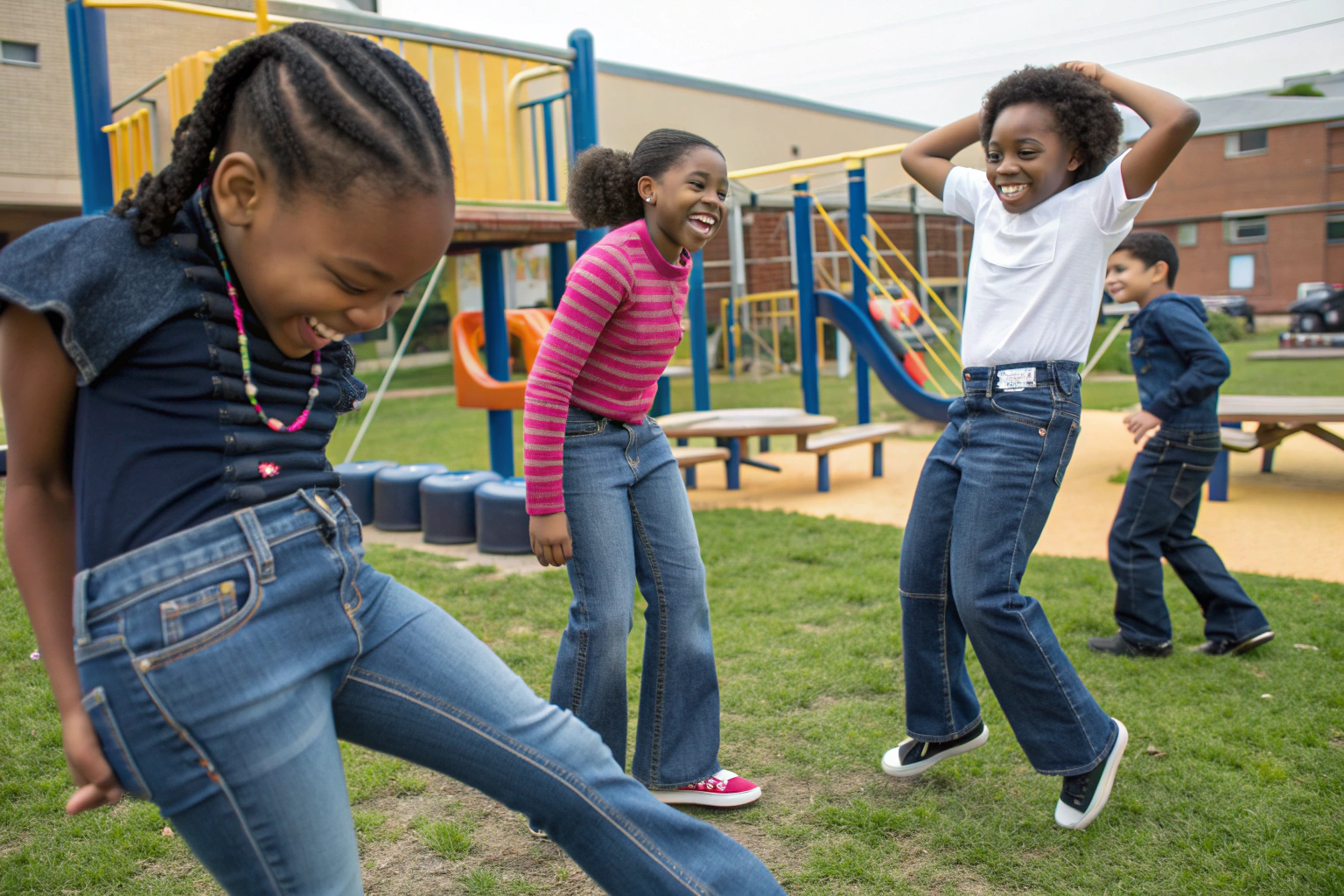
Achieving proper fit in children’s jeans extends far beyond aesthetics, impacting comfort, mobility, health, and even developmental progress. As manufacturers specializing in children’s denim, we understand how fit considerations differ significantly from adult jeans and why getting it right matters for both children and their parents.
A good fit is crucial for kids jeans because it supports proper physical development, ensures comfort during active play, affects clothing longevity through appropriate sizing, influences children’s confidence and independence, and impacts safety during movement. Unlike adult jeans where style often dominates fit considerations, children’s jeans must balance fashion with fundamental needs for growth, activity, and development. Poorly fitting jeans can restrict movement, cause discomfort, and even contribute to postural issues during critical growth periods.
How Does Proper Fit Support Physical Development and Health?
Well-fitting jeans accommodate children’s growing bodies without restricting movement or creating pressure points that could impact developing musculoskeletal systems.
Children’s bodies are in constant states of growth and development, making clothing fit a health consideration rather than purely a style choice. Jeans that are too tight can restrict circulation, limit range of motion, and even affect posture, while excessively loose jeans can create tripping hazards and interfere with physical activities crucial for development.

What Are the Specific Health Impacts of Poor Fit?
Restrictive waistbands, cramped thigh areas, and improperly proportioned rises can all negatively affect children’s physical comfort and development. According to the American Academy of Pediatrics’ clothing guidelines, clothing that constricts natural movement can potentially impact hip development in younger children and contribute to poor posture in school-aged children. Jeans with insufficient ease through the hips and thighs can limit the squatting, running, and climbing motions essential for developing strength and coordination. Additionally, waistbands that are too tight can cause skin irritation, digestive discomfort, and difficulty with breathing during physical activity—concerns that don’t typically affect adults in the same way.
How Does Fit Impact Growing Bodies Differently?
Children experience rapid growth spurts that change their proportions dramatically, meaning a good fit must accommodate not just current size but anticipated growth. The Centers for Disease Control growth charts show that children can grow up to 2.5 inches in height over just a few months during growth spurts, requiring different fit considerations than relatively stable adult bodies. Well-designed children’s jeans incorporate features like adjustable waistbands, stretch fabrics with good recovery, and slightly longer inseams that can be cuffed then let down as children grow. These adaptations recognize that children’s clothing must fit both today and several months from now, unlike adult clothing that typically fits a more static body shape.
How Does Fit Affect Comfort and Mobility During Play?
Children’s jeans must facilitate rather than restrict the active movement that defines childhood, making mobility a primary fit consideration beyond simple measurements.
The standard fit metrics used for adult jeans often fail to account for children’s need for greater range of motion, more frequent position changes, and diverse physical activities. A proper fit in children’s jeans means accommodating deep squats, high kicks, cross-legged sitting, and rapid running without binding, gaping, or restricting movement.

What Fit Elements Specifically Support Active Play?
Strategic ease in key areas, appropriate stretch percentages, and ergonomic patterning all contribute to jeans that move with children rather than restricting them. According to ASTM standards for children’s clothing performance, children’s bottoms should allow for at least 45 degrees of hip flexion and 90 degrees of knee flexion without binding or discomfort. This translates to specific fit requirements: sufficient rear coverage when bending, adequate thigh circumference for sitting cross-legged, and knee areas that don’t restrict crawling or kneeling. Jeans incorporating 2-4% mechanical stretch typically provide better mobility than 100% cotton rigid denim, while gusseted crotches and articulated knees offer even greater freedom of movement for highly active children.
How Does Comfort Impact Children’s Daily Experience?
Physical discomfort from poorly fitting jeans can distract children from learning, social interactions, and play—the essential activities of childhood. Research from the Journal of Pediatric Psychology indicates that physical discomfort can reduce children’s attention spans and participation in educational activities. Denim that constantly needs adjusting, waistbands that dig into skin, or inseams that chafe inner thighs all create distractions that pull children’s focus away from their environment and activities. Well-fitting jeans become "invisible" in the best sense—children forget they’re wearing them because they don’t create constant physical reminders of their presence through discomfort.
How Does Fit Influence Clothing Longevity and Value?
Proper fit extends beyond immediate comfort to impact how long jeans remain wearable as children grow, directly affecting the cost-per-wear and overall value equation for parents.
Children’s clothing represents a significant ongoing expense for families, making longevity an important consideration. Jeans that fit properly from the outset and accommodate growth deliver better value than those that quickly become unwearable due to poor fit, even if initially purchased at similar price points.

What Fit Features Extend Wearable Life?
Adjustable waistbands, generous inseams with deep cuffs, and strategic ease in key growth areas all help jeans remain wearable through multiple growth phases. The International Association of Clothing Designers notes that well-designed children’s jeans can accommodate 2-3 inches of growth through features like internal waistband adjustments, stretch fabrics that accommodate changing proportions, and extra inseam length that can be gradually released. These design elements mean parents might get 6-9 months of wear from a single pair of well-designed jeans compared to 2-3 months from poorly fitting options, significantly reducing the frequency of replacement purchases and overall clothing costs.
How Does Initial Fit Accuracy Reduce Replacement Frequency?
Jeans purchased in the correct size from the outset typically deliver more total wear than those bought oversized with the expectation of "growing into them." According to the Textile and Apparel Production Association, properly fitted children’s clothing experiences 40% longer usable life than ill-fitting alternatives because it’s worn immediately rather than waiting for children to grow into it. Oversized jeans often become damaged or excessively worn in specific areas before ever fitting properly, while correctly sized jeans provide optimal wear throughout their lifespan. This fit accuracy becomes particularly important with denim, which develops unique wear patterns based on how it fits individual body shapes.
How Does Fit Impact Children’s Confidence and Independence?
Well-fitting clothing plays a surprising role in children’s developing self-perception and autonomy, with jeans serving as particularly visible and frequently worn items in many children’s wardrobes.
Children’s relationship with clothing begins developing early, and fit influences how they feel about their bodies, their capabilities, and their place among peers. Jeans that fit properly support positive self-image while facilitating the independence that comes with self-dressing success.

What Psychological Benefits Come from Good Fit?
Clothing that fits properly helps children feel comfortable in their own bodies and confident in social situations. Research from the Journal of Social Psychology indicates that children as young as five recognize clothing fit differences and associate well-fitting clothes with social acceptance. Jeans that are consistently either too tight or excessively baggy can make children self-conscious, while properly fitted jeans help them feel "normal" and focused on activities rather than appearance. This is particularly important during school years when social awareness increases and clothing choices begin to carry social meaning among peers.
How Does Fit Support Dressing Independence?
Jeans with features that accommodate developing motor skills help children succeed in self-dressing, building confidence and independence. The American Occupational Therapy Association emphasizes that clothing manageable for children’s skill levels supports autonomy and self-esteem. Jeans with slightly elasticated waistbands, easy-grip zipper pulls, and manageable button sizes allow children to dress themselves successfully, while overly complicated or tight closures create frustration and dependence on adult assistance. This independence in dressing represents an important developmental milestone that properly fitted clothing supports.
How Does Safety Relate to Jean Fit?
Proper fit contributes to safety during active play by eliminating tripping hazards, preventing entanglement risks, and ensuring clothing doesn’t interfere with movement in potentially dangerous situations.
While not always immediately obvious, the safety implications of poorly fitting jeans can be significant, particularly for younger children who are still developing coordination and judgment about physical risks. Well-fitting jeans support rather than compromise safety during the active play that defines childhood.

What Specific Safety Issues Arise from Poor Fit?
Excessively long inseams create tripping hazards, particularly on stairs, playground equipment, and uneven surfaces. Overly baggy legs can catch on bicycle chains, playground equipment, or other hazards during active play. According to the Consumer Product Safety Commission’s clothing guidelines, properly fitted children’s clothing should not extend more than 1-2 inches beyond shoe tops to prevent tripping. Additionally, waistbands that are too loose can cause jeans to slip down during running or climbing, potentially restricting movement or causing falls. These safety considerations make proper fit a protective measure rather than just a comfort or style concern.
How Does Fit Interact with Protective Function?
Well-fitting jeans provide appropriate coverage and protection during activities where children might encounter scrapes, abrasions, or minor impacts. Jeans that are too tight may ride up during activity, exposing vulnerable skin at ankles and shins, while excessively loose jeans may gap at the waist or fail to stay in position to provide consistent protection. The National Safety Council’s playground safety guidelines note that properly fitted clothing can reduce minor injury risk by maintaining protective coverage during falls or collisions. This protective function represents another dimension of why fit matters beyond mere appearance or comfort.
Conclusion
A good fit in kids jeans represents a complex interplay of health considerations, developmental support, practical functionality, psychological benefits, and safety concerns that extend far beyond simple measurements. The importance of proper fit reflects children’s unique needs as growing, active individuals who require clothing that supports rather than restricts their physical development and daily experiences. Well-fitting jeans become enabling tools for childhood rather than restrictive garments.
The most successful children’s jeans balance accurate sizing with understanding of how children move, grow, and experience their world through their clothing. If you’re developing children’s denim and need manufacturing partners who understand the critical importance of fit and how to achieve it across diverse body types and developmental stages, contact our Business Director, Elaine, at elaine@fumaoclothing.com. Let’s discuss how we can help you create jeans that deliver the fit, comfort, and durability that support children’s active lives while providing the value and longevity parents appreciate.