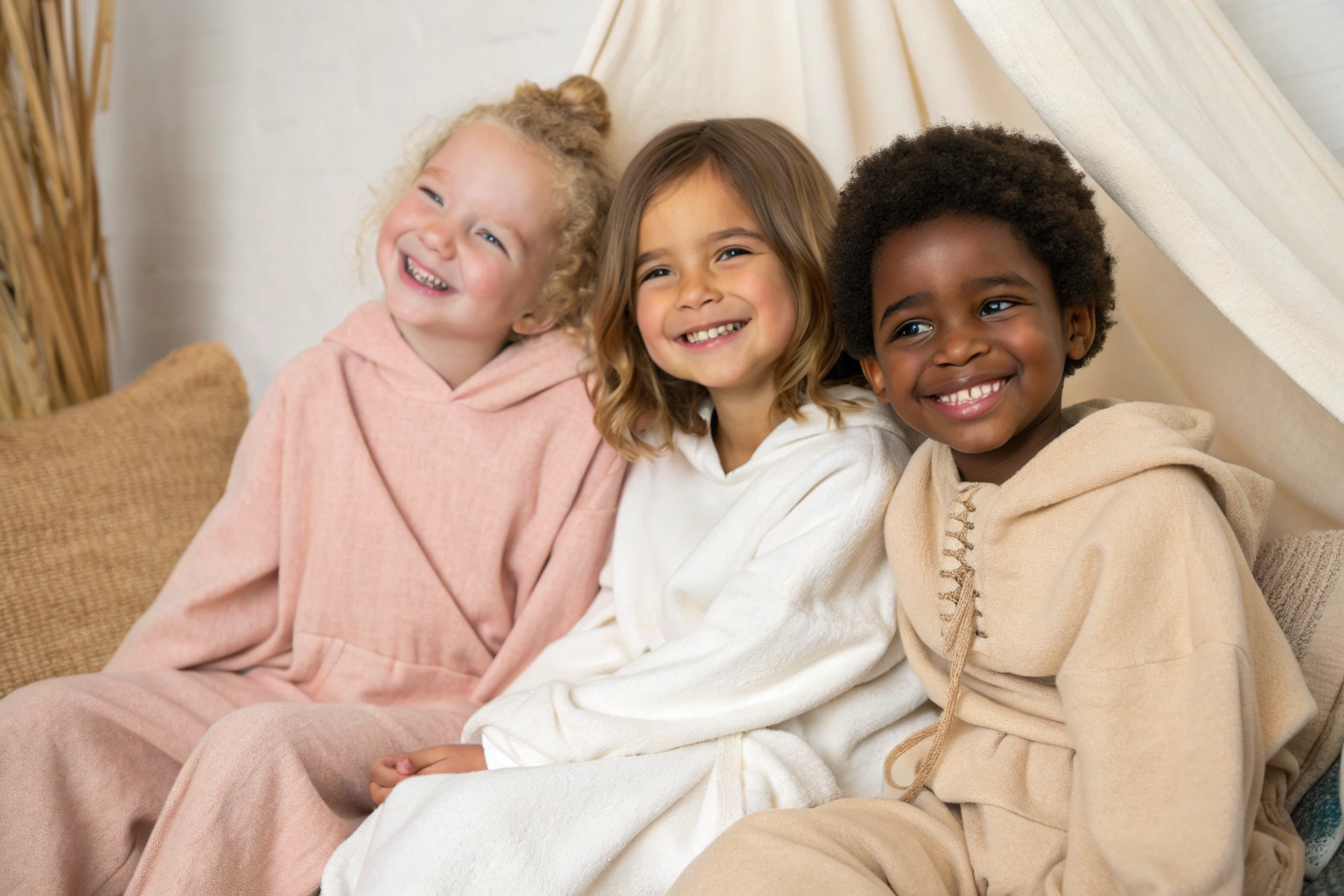
Choosing the right fabrics for children with sensitive skin requires understanding both textile properties and dermatological considerations. As manufacturers specializing in children’s clothing for sensitive skin, we’ve identified specific fabrics that minimize irritation while providing comfort and durability.
The best fabrics for kids with sensitive skin are 100% organic cotton, bamboo viscose, silk, linen, and specific hypoallergenic synthetics like Tencel™ that combine natural origins with technical benefits. These fabrics share characteristics like breathability, moisture-wicking properties, soft texture, and absence of chemical irritants that can trigger skin reactions. The optimal choice depends on the child’s specific sensitivities, the clothing’s purpose, and practical considerations like care requirements and durability.
Why Are Natural Fibers Generally Preferred for Sensitive Skin?
Natural fibers typically cause fewer skin reactions than synthetic alternatives due to their breathability, moisture management, and absence of petroleum-based chemicals that can irritate delicate skin.
Children’s skin is more permeable and sensitive than adult skin, making fabric selection particularly important for preventing irritation, rashes, and discomfort. Natural fibers allow skin to breathe, wick moisture away from the body, and generally contain fewer chemical residues from processing. However, not all natural fibers are equally suitable, and processing methods significantly impact their gentleness on sensitive skin.

What Makes Organic Cotton the Gold Standard?
Organic cotton stands as the benchmark for children’s sensitive skin due to its softness, breathability, and absence of pesticide residues. Unlike conventional cotton, organic certification by GOTS (Global Organic Textile Standard) ensures no toxic pesticides, herbicides, or synthetic fertilizers were used in cultivation. According to dermatological research published in the Journal of Clinical and Aesthetic Dermatology, organic cotton significantly reduces the risk of contact dermatitis compared to conventional cotton. The fabric’s hollow fiber structure provides excellent breathability, while its natural softness improves with washing, making it ideal for children who may develop irritation from repetitive friction.
How Does Bamboo Viscose Benefit Sensitive Skin?
Bamboo viscose offers exceptional softness and natural antibacterial properties that benefit children with sensitive or eczema-prone skin. The fiber’s smooth, round structure creates a fabric that feels silky against skin without rough fibers that can cause micro-abrasions. Additionally, bamboo contains a natural antimicrobial agent called "bamboo kun" that reduces bacterial growth—particularly valuable for children whose skin conditions may be exacerbated by bacteria. The Textile Research Journal notes that bamboo fabrics demonstrate 70% higher moisture-wicking capability than cotton, keeping skin drier and reducing irritation from dampness. However, parents should verify the processing methods, as some bamboo viscose production uses chemicals that must be thoroughly washed out.
What Technical Natural Fibers Offer Advanced Benefits?
Advanced natural fibers and responsibly processed semi-synthetics provide specialized benefits for children with specific sensitivities, combining natural origins with enhanced performance properties.
Some of the most suitable fabrics for sensitive skin utilize natural raw materials processed with environmentally responsible methods that maintain fiber purity while enhancing functionality. These fabrics often offer superior performance in specific areas like temperature regulation, moisture management, or allergen reduction.

Why Is Tencel™ Lyocell Recommended for Extremely Sensitive Skin?
Tencel™ Lyocell, produced from sustainably sourced wood pulp using a closed-loop process that recycles almost all chemicals, offers exceptional gentleness for highly sensitive skin. The fiber’s incredibly smooth surface creates less friction than cotton, while its superior moisture absorption (50% higher than cotton) pulls moisture away from skin more effectively. According to the Oeko-Tex Association, Tencel™ consistently achieves their highest certification level for human ecological safety. The fabric’s natural origin combined with its breathability and silky texture makes it particularly suitable for children with eczema, as it reduces both friction irritation and moisture-related flare-ups.
How Does Silk Benefit Children with Skin Conditions?
Medical-grade silk provides unique benefits for children with severe eczema or other dermatological conditions. Silk contains natural proteins similar to human skin, making it biologically compatible and less likely to trigger immune responses. The National Eczema Association has granted their Seal of Acceptance to specific silk products that meet their stringent criteria. Silk’s temperature-regulating properties help maintain stable skin temperature, reducing sweat-induced itching, while its smooth surface minimizes friction that can aggravate existing skin irritations. While less practical for everyday playwear due to care requirements and cost, silk is invaluable for nightwear and underlayers for children with significant skin challenges.
What Fabric Characteristics Should Parents Avoid?
Certain fabric properties and processing methods consistently cause problems for children with sensitive skin, making awareness of potential irritants as important as knowing which fabrics to select.
Understanding what to avoid helps parents navigate clothing choices more effectively, particularly when shopping from brands that don’t specialize in sensitive skin needs. Common irritants include specific fiber types, chemical treatments, and construction methods that create friction or trap moisture against skin.

Which Synthetic Fabrics Typically Cause Issues?
Polyester, nylon, and conventional acrylic often problematic for sensitive skin due to their poor breathability and chemical processing requirements. These petroleum-based fabrics trap moisture against skin, creating a damp environment where bacteria thrive and irritation develops. According to the American Academy of Dermatology, occlusive fabrics that prevent sweat evaporation significantly worsen eczema symptoms. Additionally, the chemical processing required to create these synthetics often leaves residues that can trigger allergic reactions. While some technical synthetics with moisture-wicking treatments can work for activewear, natural alternatives generally provide better compatibility with sensitive skin.
What Chemical Treatments Should Be Avoided?
Formaldehyde resins (for wrinkle resistance), conventional dyes with heavy metals, chlorine bleaches, and flame retardants represent common chemical irritants in children’s clothing. The Consumer Product Safety Commission regulates some of these chemicals, but others remain in use. Parents should look for Oeko-Tex Standard 100 certification, which verifies the absence of over 100 harmful substances. Additionally, optical brighteners used to make whites appear brighter can cause phototoxic reactions, while synthetic fragrances added to fabrics frequently trigger contact dermatitis in sensitive children.
How Do Fabric Construction and Finishing Impact Skin Comfort?
Beyond fiber content, how fabrics are woven, knitted, and finished significantly impacts their comfort and suitability for sensitive skin, with certain constructions minimizing potential irritation.
Fabric construction determines characteristics like texture, weight, stretch, and surface smoothness that directly affect how clothing interacts with skin. Similarly, finishing processes can either enhance comfort or introduce irritants, making production methods as important as material selection.

Which Construction Methods Maximize Comfort?
Seamless knitting, high-thread-count weaves, and brushed finishes create fabrics that minimize friction and irritation for sensitive skin. Seamless construction eliminates the raised seams that often cause discomfort, particularly for children who may have tactile sensitivities. According to the Textile Institute’s comfort research, fabrics with longer fiber staples (like Pima or Egyptian cotton) create smoother surfaces with fewer protruding ends that can scratch or tickle sensitive skin. Brushed finishes that raise the fabric surface create additional loft that cushions skin from friction, while maintaining breathability when done with natural fibers. These construction details often differentiate basic natural fiber clothing from products specifically designed for sensitive skin.
How Do Dyeing and Finishing Processes Affect Safety?
Low-impact dyeing methods, enzyme washing instead of chemical softening, and mechanical finishing rather than chemical treatments significantly reduce potential irritants in finished clothing. Conventional textile dyeing uses heavy metals and toxic fixatives, while low-impact dyes typically utilize safer metal-free alternatives with higher absorption rates that require less rinsing. The Sustainable Apparel Coalition’s Higg Index measures environmental impacts including chemical use throughout production. Enzyme washing creates softness through biological action rather than chemical softeners that coat fibers and can irritate skin. Mechanical finishing techniques like calendaring or sueding create desirable fabric hand without chemical additives.
Conclusion
Selecting the best fabrics for children with sensitive skin involves considering fiber content, processing methods, construction techniques, and finishing processes that collectively determine a fabric’s gentleness. Organic cotton, bamboo viscose, Tencel™, silk, and linen represent the safest choices, particularly when certified by recognized standards like GOTS or Oeko-Tex that verify minimal chemical residues. Beyond material selection, seamless construction, tagless designs, and soft elastic alternatives further enhance comfort for sensitive skin.
The most successful clothing for children with sensitivities combines dermatological understanding with practical design that accommodates active lifestyles while minimizing potential irritants. If you’re developing children’s clothing specifically for sensitive skin and need manufacturing expertise with these specialized fabrics and constructions, contact our Business Director, Elaine, at elaine@fumaoclothing.com. Let’s discuss how we can help you create clothing that combines comfort, safety, and durability while addressing the specific needs of children with sensitive skin conditions.