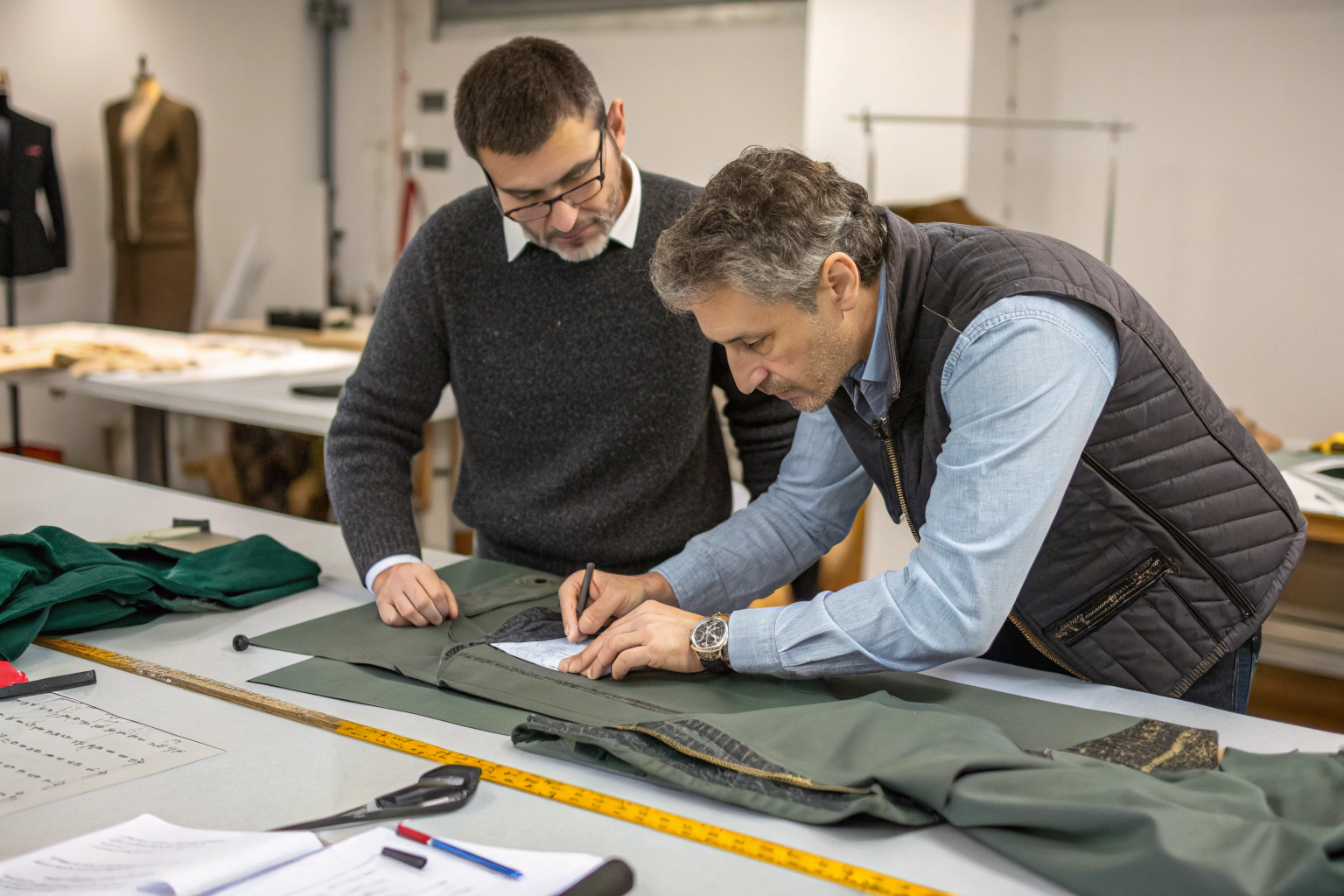
You’ve designed a beautiful collection, selected premium fabrics, and are ready to launch production. But skipping the sampling stage to save time or money can be the costliest decision you make. For clothing brand owners and buyers, the sample stage is where you catch mistakes that could otherwise ruin your entire production run and damage your brand reputation.
A clothing sample is crucial before mass production because it serves as a physical prototype to verify design accuracy, assess fabric quality and fit, confirm production feasibility, and establish quality benchmarks with your manufacturer. It’s your final opportunity to identify and correct issues before committing to large-scale production. Skipping this step often leads to catastrophic failures that can’t be fixed once thousands of units are produced.
The sampling process might seem like an unnecessary delay, but it’s actually your most effective risk management tool. Let’s explore why this step deserves your full attention and investment.
How do samples prevent costly production mistakes?
Samples act as your early warning system, catching errors that are much cheaper to fix at the prototype stage than during mass production. A simple design flaw that costs $50 to correct in sampling could cost $50,000 to rectify once 10,000 pieces have been manufactured incorrectly.
Samples prevent costly mistakes by revealing design flaws, construction issues, and specification errors before they’re replicated across your entire production order. They provide tangible proof of how your design translates into an actual garment, allowing you to make informed decisions and adjustments. This proactive approach saves significant resources that would otherwise be spent on reworks, waste, or discounted defective merchandise.

What common design flaws do samples reveal?
Samples frequently uncover design elements that looked perfect on paper but don’t work in reality. Common issues include sleeves that are too tight for movement, necklines that gap awkwardly, pocket placements that disrupt the garment’s silhouette, or decorative elements that affect comfort. During our sampling process, we recently discovered that a client’s beautiful asymmetrical hemline curled unattractively when worn—a problem that wasn’t visible in their technical drawings. By identifying these design flaws early, we saved them from producing 5,000 defective garments that would have been unsellable.
How do samples identify construction weaknesses?
Physical samples allow you to test garment durability and construction integrity in ways digital representations cannot. You can assess seam strength, stress points, and overall craftsmanship before mass production begins. We routinely perform stress tests on samples, checking if seams hold during movement, if buttons are securely attached, and if reinforced stitching is needed in high-stress areas. This process helps establish the correct construction standards for your entire order, ensuring the final products withstand real-world use and maintain quality through washing and wearing.
How do samples ensure accurate sizing and fit?
Fit issues represent one of the most common reasons for customer returns and negative reviews in the fashion industry. Samples provide the only reliable method to verify that your sizing specifications translate correctly into wearable garments that fit your target demographic properly.
Samples ensure accurate sizing and fit by allowing physical try-ons, necessary adjustments to pattern pieces, and verification against standardized size charts before cutting thousands of garments. This process bridges the gap between technical measurements and how clothing actually looks and feels on the body.

Why is fit testing on real people crucial?
Digital fit simulations and measurements alone cannot capture how fabric drapes on different body types or how garments move during normal activities. We require our clients to conduct fit tests on people who match their target customer’s body shape and size. This often reveals unexpected issues like armholes that restrict movement, waistbands that roll over, or length proportions that don’t flatter real body types. This hands-on fit assessment provides invaluable feedback that transforms good designs into exceptional wearing experiences.
How do samples help standardize sizing across batches?
Samples serve as the reference standard for your entire production run, ensuring consistency across all units. Without an approved sample, slight variations in cutting or sewing can create noticeable differences between garments from the same order. We use approved samples as our quality benchmark throughout production, training our quality control teams to match the exact fit, measurements, and appearance of the reference sample. This practice maintains sizing consistency and prevents the common problem where the first and last garments from a production run fit differently.
How do samples facilitate better supplier communication?
Samples transform abstract design concepts into concrete reference points that both you and your manufacturer can see, touch, and measure. This tangible representation dramatically improves communication clarity and reduces misunderstandings that often occur when relying solely on technical drawings or verbal descriptions.
Samples facilitate better supplier communication by providing a physical reference that eliminates language barriers, clarifies design intent, and establishes unambiguous quality expectations for mass production. They make abstract quality standards concrete and measurable.

How do samples bridge language and terminology gaps?
Fashion terminology can vary significantly between regions and even between manufacturers. What one factory calls "French seams" might differ from another’s interpretation. Samples make expectations crystal clear regardless of language barriers. When we provide samples to our international clients, they can physically point to specific details, drape characteristics, or stitching methods they want to modify. This hands-on communication method prevents the misunderstandings that often occur when relying solely on written specifications or translated conversations.
How do samples help establish quality benchmarks?
Quality standards like "good stitching" or "proper finishing" are subjective without physical references. Samples make these standards objective and measurable. When you approve a sample, you’re essentially saying "produce all garments to match this exact quality level." We photograph approved samples from multiple angles and use them to train our production teams and quality inspectors. This practice ensures everyone understands the expected quality standards, from fabric hand-feel to stitch density to trim application consistency.
How do samples impact cost management?
While sampling requires an initial investment of time and resources, it ultimately saves significant money by preventing costly errors, reducing waste, and ensuring customer satisfaction. View sampling not as an expense but as insurance for your much larger production investment.
Samples impact cost management by identifying issues early when correction costs are minimal, optimizing material usage through pattern verification, and preventing customer returns due to quality or fit problems. This proactive approach protects your profit margins and brand reputation.

How does sampling reduce material waste?
Samples allow manufacturers to test and optimize pattern layouts and cutting plans before committing large quantities of fabric. During sampling, we often identify ways to improve material utilization by adjusting pattern pieces or cutting sequences. These small optimizations, when applied to full production, can reduce fabric waste by 5-15%—creating significant cost savings and environmental benefits, especially with expensive materials.
How do samples prevent financial losses from returns?
Fit issues and quality problems represent the primary reasons for fashion returns, which typically cost retailers 20-65% of the original item’s price to process. A thorough sampling process dramatically reduces these returns by ensuring products meet customer expectations for fit, quality, and appearance. Investing in comprehensive sampling is far more economical than dealing with the financial impact of high return rates, damaged brand reputation, and discounted defective inventory.
Conclusion
The clothing sampling process is not a production barrier but a vital quality assurance step that protects your investment, ensures customer satisfaction, and builds stronger manufacturer relationships. By thoroughly evaluating samples for design accuracy, fit, construction quality, and production feasibility, you transform potential failures into successful products that strengthen your brand.
Don’t leave your production quality to chance. Request a sample to experience our commitment to precision and quality firsthand. Contact our Business Director, Elaine, at elaine@fumaoclothing.com to discuss your sampling needs and how we can help you perfect your designs before mass production.