As a children’s clothing manufacturer, I understand how frustrating it is when quality issues emerge in production. You’ve invested in beautiful designs and marketing, only to face returns and complaints because of manufacturing defects. Loose threads, color mismatches, and safety concerns that should have been caught earlier can damage your brand’s reputation.
Effective kids clothing quality inspection involves systematic checks at three key stages: before production begins, during manufacturing, and before shipment. This comprehensive approach ensures safety, durability, and consistency while meeting international standards for children’s products.
Many brands assume their manufacturers have strong quality systems in place, but this trust can lead to unpleasant surprises. Through years of experience at Fumao Clothing, I’ve learned that proactive quality management is what separates successful brands from those constantly managing product issues. Here’s the practical framework that has served our partners well.
How to Set Up Quality Checks Before Production Starts?
Finding problems before full-scale manufacturing begins saves time, money, and frustration. Many quality issues start with inadequate preparation and unclear standards. Establishing precise requirements upfront prevents small concerns from becoming major batch problems.
Setting up effective pre-production quality checks involves careful fabric testing, component verification, and using approved samples as references. This stage establishes your quality standards before cutting and sewing operations begin, ensuring all materials meet safety and performance needs for children’s clothing.

What Materials Need Testing Before Manufacturing?
Fabric and material inspection forms the basis of quality children’s clothing. We require all materials to undergo thorough testing at approved laboratories before we cut anything. The American Association of Textile Chemists and Colorists standards guide our evaluation of how well colors withstand washing, rubbing, and light exposure. For children’s clothing specifically, we test for potentially harmful substances following CPSIA guidelines, including lead content and certain chemicals.
Beyond required safety tests, we examine practical performance characteristics. Fabric shrinkage tests help predict how much garments will change size after washing. Strength tests ensure durability for active children. Pilling resistance checks maintain good appearance after repeated wear. For stretchy knitted items, we verify weight and recovery ability. These material inspections prevent about 40% of potential quality problems before manufacturing even starts.
How Do Reference Samples Help Maintain Quality?
Approved reference samples act as visual and physical agreements between our clients and production teams. We create and approve several sample types during development. Initial samples confirm design understanding and basic fit. Fit samples, made on standard forms, verify pattern accuracy and comfort. Final pre-production samples, manufactured with actual production materials, represent the expected finished quality.
We keep these approved samples in controlled conditions with signed approval documents from both technical and buying teams. During manufacturing, supervisors compare production items against these references every two hours. This practice maintains consistency and catches differences early. For one client, this sample comparison process identified a noticeable color difference in dyed fabric before cutting began, preventing a 20,000-piece order from having inconsistent colors.
What Should You Check During Manufacturing?
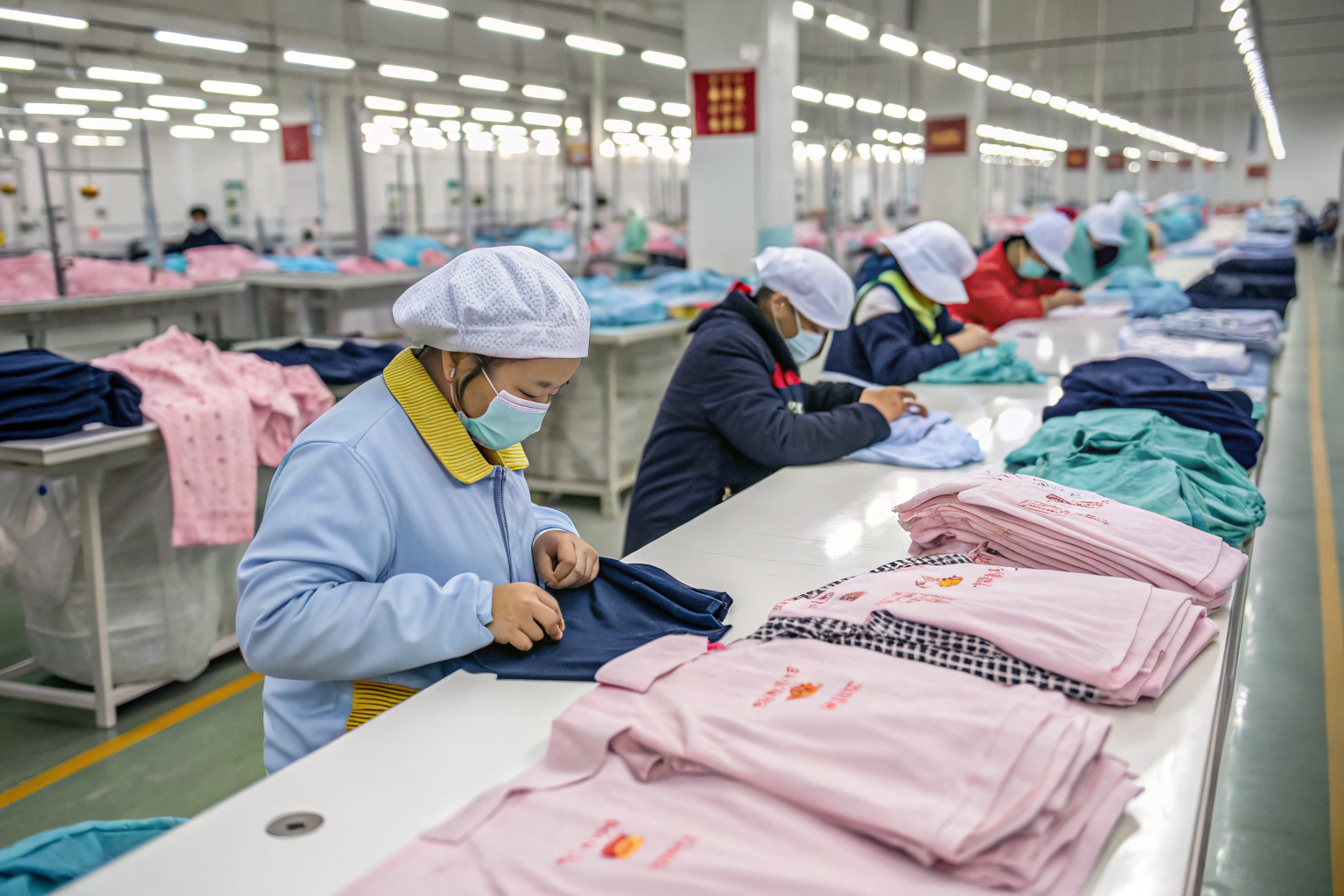
Ongoing quality checks during production catch issues while they can still be fixed. Unlike final inspection that finds problems after completion, during-production monitoring addresses concerns at their source. Our quality teams position themselves at important control points throughout the manufacturing process.
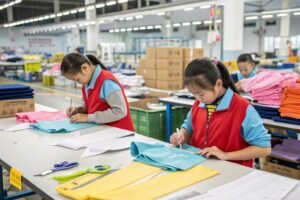
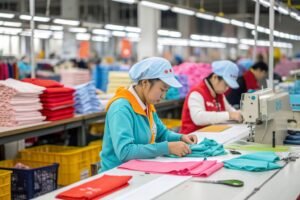
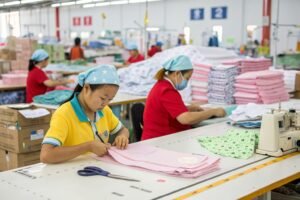
Key during-production inspection points focus on cutting precision, sewing quality, and assembly accuracy. Regular line checks and supervisor monitoring ensure consistent workmanship and immediate correction of any deviations, maintaining quality standards throughout the manufacturing process.
How Do You Monitor Cutting and Sewing Quality?
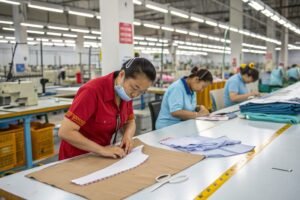
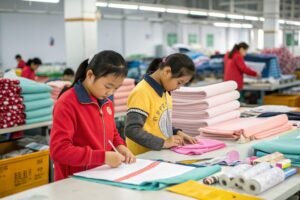
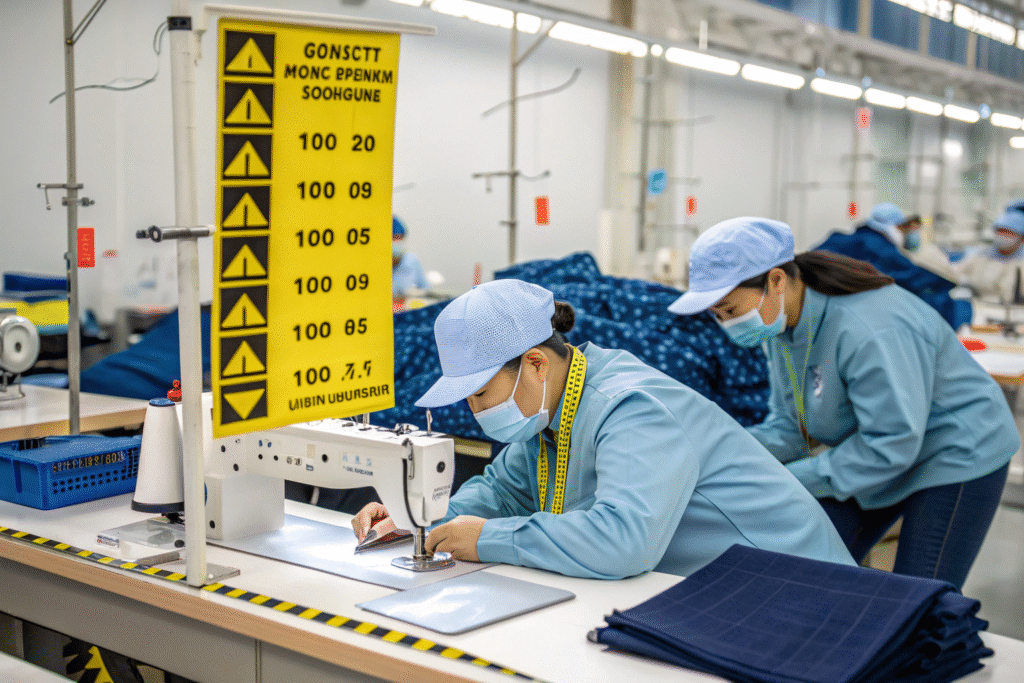
Cutting accuracy determines garment symmetry and pattern alignment. Our quality teams verify that fabric layers maintain even tension and proper alignment. Cut pieces undergo complete checking for notch accuracy, pattern matching, and cutting flaws. We use precise measuring tools to confirm dimensions stay within 0.3cm tolerance.
Sewing inspection concentrates on stitch quality, seam strength, and construction accuracy. We regularly check:
| Inspection Area | Frequency | Acceptable Variation |
|---|---|---|
| Stitch Density | Every 10 units | ±1 stitch per inch |
| Seam Allowance | Every 15 units | ±0.2cm |
| Thread Tension | Continuous | No looping or puckering |
For children’s clothing, we pay extra attention to reinforced stitching at stress areas like crotches and armholes. Flat seams prevent skin irritation. Our inspectors follow established stitch standards as reference for appropriate seam types in different garment areas.
Which Assembly Steps Need Special Attention?
Garment assembly presents multiple opportunities for quality variations. Our quality teams work alongside assembly lines to verify component matching, decoration placement, and attachment security. For children’s items, we particularly focus on safety aspects like snap fastener strength, button attachment security, and zipper function.
We use a system where each worker checks previous operations before adding their work. Supervisors conduct random checks every hour, measuring important dimensions and testing function. This layered approach identified a problem with incorrectly placed size labels early in production, preventing mixed shipments that would have caused problems for our client’s retail stores.
How to Perform Complete Final Inspection?
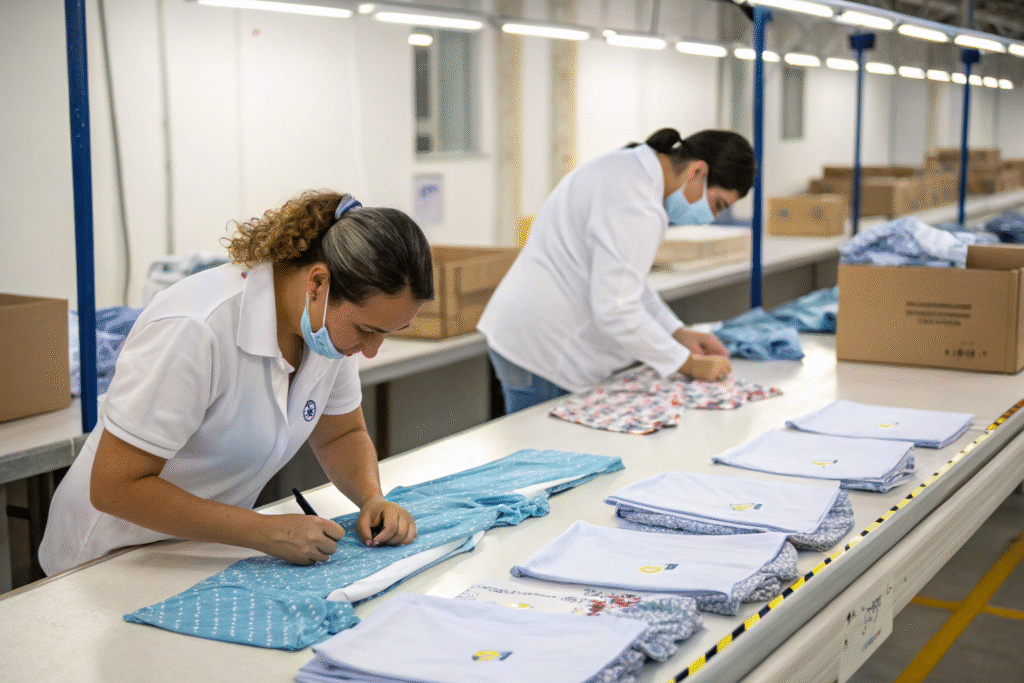
Final random inspection represents the last opportunity to catch problems before shipment. Conducted on finished, packaged items ready for shipping, this evaluation determines whether the complete production lot meets acceptance standards. The AQL sampling method provides reliable results while maintaining inspection efficiency.
Complete final inspection follows internationally recognized sampling standards to fairly evaluate workmanship, function, packaging, and safety. This organized approach provides reliable information about lot quality while identifying serious defects that could endanger children or harm brand reputation.
What Problem Classification System Works Best?
Effective final inspection requires clear problem categories that reflect what customers will accept. We use a three-level classification system matching major retail standards:
- Critical Problems: Safety issues that could harm children, like sharp objects, loose small parts, or dangerous materials. Finding any critical problem means rejecting the entire lot.
- Major Problems: Issues affecting product function or appearance that would lead to customer returns, including holes, stains, broken stitches, or wrong colors. Our acceptance limit for major problems is 2.5 for standard inspection level II.
- Minor Problems: Flaws not affecting product function or wearability, like small stitching variations or slight color differences. These have higher acceptance limits but still need monitoring.
This classification system enables fair evaluation and consistent decisions across different inspectors and product types. For one recent order, this approach found inconsistent dye lots that weren’t visible during earlier checks, preventing a shipment with noticeable color variation between items.
How to Check Packaging and Labeling Correctness?
Proper packaging and labeling ensure products arrive at stores ready for sale. Our final inspection includes complete packaging checks: plastic bag safety warnings for young children, box markings for easy identification, and shipping container strength for international transport. We verify that care labeling symbols match fabric content and country-specific requirements.
Label accuracy goes beyond basic information to include regulatory compliance. We check for correct country of origin labeling, accurate fiber content, and proper safety compliance labeling. For one client, our packaging inspection found missing flame resistance warnings on sleepwear, preventing possible regulatory problems in their target market.
How to Select Dependable Quality Inspection Partners?
Your inspection approach is only as good as the team implementing it. Many importers have difficulty finding inspection partners who understand both technical requirements and business realities. The right partner serves as your eyes in the factory, providing honest assessment and practical solutions.
Selecting dependable quality inspection partners requires checking their technical knowledge, independence from manufacturing influence, and understanding of children’s product regulations. Look for demonstrated experience with your product type, clear reporting systems, and knowledge of international safety standards.

What Background Should Inspection Staff Have?
Qualified inspectors combine technical knowledge with hands-on experience. Our quality team members have education in textile engineering or fashion technology, supplemented by factory production experience. This background helps them tell the difference between style preferences and actual defects. All inspectors complete thorough training on children’s product safety standards, including:
- Physical safety requirements for different age groups
- Chemical restrictions under various regulations
- Flammability standards for sleepwear and other categories
- Proper labeling and tracking requirements
Beyond technical knowledge, we value inspectors with good communication skills who can explain issues clearly to both factory management and our clients. This prevents misunderstandings and supports quick problem-solving when concerns arise.
How to Assess Inspection Company Independence?
Genuine inspection partners maintain complete separation from manufacturing pressures. We’ve organized our quality assurance department as a separate unit with no connection to production incentives. This organizational separation ensures that quality decisions aren’t influenced by production demands.
When evaluating potential partners, check their reporting honesty. Do they document issues with photos? Are their reports specific about problem location and seriousness? Do they provide factual information rather than personal opinions? For one client considering a new supplier, our inspection revealed overstated production capacity that would have caused delivery delays during busy season.
Conclusion
Implementing thorough kids clothing quality inspection across pre-production, manufacturing, and final stages protects your brand investment and ensures customer satisfaction. The systematic approach we’ve developed at Fumao Clothing addresses both technical requirements and business aspects of global sourcing. By establishing clear standards, monitoring important control points, and conducting reliable final inspections, you can reduce quality risks in your supply chain.
Your commitment to quality shouldn’t stop with finding a manufacturer – it should guide your entire production process. If you’re looking for a manufacturing partner with clear quality systems and proven experience in children’s wear, contact our Business Director Elaine at elaine@fumaoclothing.com. Let’s discuss how our inspection methods can protect your brand while delivering the consistent quality your customers expect.