
The children’s wear market is buzzing with talk of "smart clothing." For brand owners and distributors like you, this isn’t just a trend; it’s the next frontier. But the question remains: how do you reliably source high-quality, IoT-enabled children’s clothing that meets safety standards and delivers real value? Sourcing these tech-infused garments involves a complex dance of finding the right factory, ensuring component quality, and navigating new logistics. This guide will walk you through the entire process.
Sourcing IoT-enabled children’s clothing requires partnering with a manufacturer that has proven expertise in both traditional apparel construction and the integration of electronic components. You need a supplier who manages the entire process, from durable, child-safe design to reliable tech functionality and certified global logistics. This approach ensures you get a market-ready product that is both innovative and dependable.
Navigating this new category can be challenging. You have to think about more than just fabric and thread. Let’s break down the key steps to make your sourcing journey for smart kids’ wear a success.
What are the key features to look for in IoT kids’ wear?
When evaluating IoT children’s clothing, your focus should be on features that offer genuine utility and uncompromising safety. The goal is to merge technology with clothing in a way that is seamless, durable, and truly beneficial for both the child and the parent.
The most critical features fall into two categories: functionality and safety. For functionality, look for items like real-time location tracking, body temperature monitoring, and physical activity tracking. These features provide peace of mind to parents. On the safety side, the non-negotiable elements are washable and durable electronics, non-toxic, hypoallergenic materials, and child-proof battery compartments. A manufacturer that prioritizes these aspects demonstrates a deep understanding of the product category.
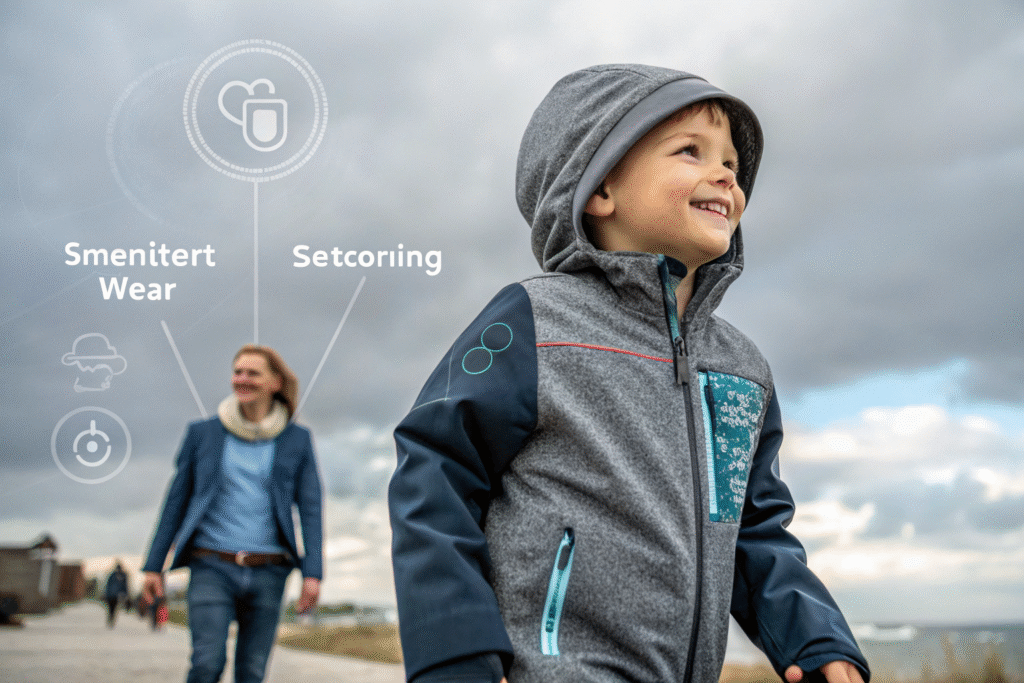
How to ensure the technology is safe and durable?
Safety is the top priority. The integrated technology must be physically safe and reliably functional. First, the electronic modules must be encapsulated in a soft, flexible, and waterproof resin. This protects the circuitry from moisture, shock, and the rigors of a child’s play. Second, all batteries should be non-removable by a child and use low-voltage, lithium-ion polymer cells that are safe for skin contact. Finally, the entire garment, especially the tech components, must withstand repeated home washing. We subject our smart clothing prototypes to over 50 wash cycles to validate durability before they go into production.
What certifications are mandatory for smart clothing?
Certifications are your proof of compliance and safety. For IoT children’s clothing, standard apparel certifications are not enough. You must look for suppliers who hold verified OEKO-TEX® STANDARD 100 certificates for textiles, which test for harmful substances. Crucially, the electronic components must have CE Marking and FCC Certification for electromagnetic compatibility. For the US market, compliance with Consumer Product Safety Improvement Act (CPSIA) regulations is mandatory. Always ask your supplier for copies of these certificates and verify their authenticity directly with the issuing bodies to avoid the risk of falsified documents, a common pain point in the industry.
How to find a reliable IoT garment manufacturer?
Finding a partner, not just a vendor, is the cornerstone of success. Your ideal manufacturer should have a documented history of producing both high-quality children’s wear and integrating electronics, supported by a transparent and communicative team.
Start your search on platforms known for B2B manufacturing, like Alibaba.com, filtering for "Smart Clothing Manufacturers" and verifying their "Assessed Supplier" status. Attend major international fashion and technology exhibitions such as the Consumer Electronics Show (CES) or Magic in the US, where forward-thinking manufacturers showcase their capabilities. The most effective method, however, is often a direct Google search using specific long-tail keywords like "IoT kids wear factory China" or "smart children’s clothing manufacturer." This can lead you to specialized factories with dedicated R&D departments, like ours, that may not be prominent on all platforms.

What questions should you ask a potential supplier?
Your initial inquiry should separate the truly capable from the opportunistic. Go beyond price and ask these critical questions: "Can you provide a full bill of materials for both the garment and the electronic module?" and "What is your specific quality control process for testing the functionality of the tech components in every single piece?" Also, ask "What is your protocol for firmware updates and handling defective electronic units?" Their answers will reveal their depth of expertise and commitment to a partnership.
Why is a factory audit crucial?
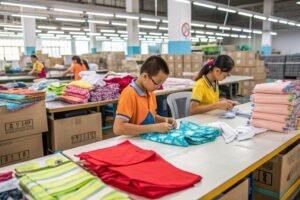
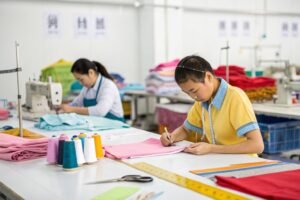
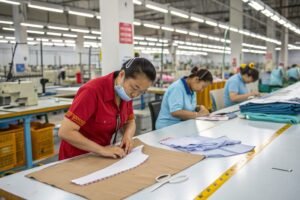
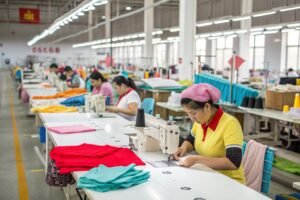
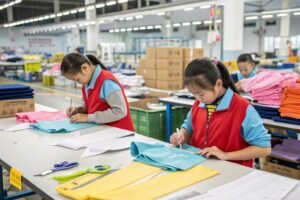
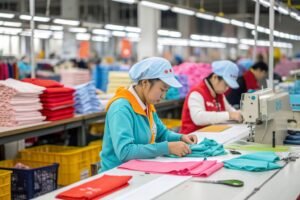
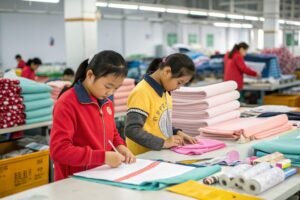
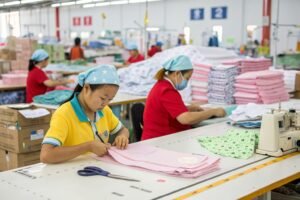
A virtual or in-person factory audit is non-negotiable. It addresses the core pain point of trust and communication. You need to verify their claimed production capacity and quality standards firsthand. Look for evidence of an organized production line with separate stations for electronics assembly and garment stitching. Check if they have a functional quality assurance lab with equipment to test seam strength, colorfastness, and electronic module performance. An audit also lets you assess the professionalism of the sales representatives and project managers, ensuring you have a single point of contact who provides clear, timely updates to prevent communication delays.
What is the development process for smart clothing?
A structured, phase-based development process is what separates a successful product launch from a costly failure. This process ensures that every aspect, from design to delivery, is meticulously planned and executed.
The process typically involves four key stages. It begins with Tech-Infused Design, where designers and engineers collaborate to place sensors and hardware in a way that doesn’t compromise comfort. Next is Prototyping and Validation, where a working sample is created and subjected to rigorous tests for wearability, connectivity, and durability. The third stage is Pre-Production Run, where a small batch is manufactured to validate the production line setup and finalize quality control checkpoints. The final stage is Mass Production and QC, where every unit is checked before shipping. We provide our clients with weekly production reports with photos and videos, offering complete transparency throughout this journey.

How long does the prototyping phase take?
The prototyping phase for IoT clothing is longer than for standard apparel, typically taking 4 to 6 weeks. This extended time is necessary for multiple rounds of sampling. The first sample (Proto Sample) checks the design and basic fit. The second sample (Fit and Function Sample) integrates the core electronics to test functionality and user experience. Often, a third pre-production sample is made using actual production materials and components. Rushing this phase almost always leads to costly errors and delayed shipments later, which can cause you to miss your selling season.
What are the critical quality control checkpoints?
Quality control for smart clothing is multi-layered. Key checkpoints include:
| Checkpoint Category | Specific Tests |
|---|---|
| Garment Quality | Seam strength, fabric color fastness, absence of harmful substances |
| Electronic Function | Battery life, sensor accuracy, Bluetooth connectivity, LED/Screen operation |
| Durability & Safety | Wash test (circuit functionality post-wash), drop test, child-safe battery enclosure |
A professional factory will have a detailed Inspection Checklist for every single unit, ensuring that no defective product reaches your customers.
How to manage logistics and payment for IoT apparel?
The final hurdle involves getting your innovative product from the factory floor to your warehouse efficiently and securely. IoT items require special consideration in shipping and financial handling.
For logistics, DDP (Delivered Duty Paid) Incoterms are highly recommended. This means your supplier handles everything: shipping, export/import clearance, and paying all duties and taxes, delivering the goods directly to your door. This simplifies the process immensely for you and provides cost certainty. For payment, a secure, phased structure is standard. It typically involves a 30% deposit to initiate production, 40% approval payment after pre-shipment samples are confirmed, and the final 30% balance before shipment. This protects both you and the supplier.

Why choose DDP shipping for smart garments?
DDP is the best choice for IoT apparel because these goods often have specific customs classification and regulatory requirements. A supplier experienced in DDP service will correctly classify your smart garments, manage the necessary documentation for the electronic components, and ensure a smooth customs clearance process. This prevents your shipment from being held at the port, avoiding unexpected fees and significant delays that could impact your product launch timeline.
What are the safest payment methods?
The safest methods balance risk for both parties. Letter of Credit (L/C) is very secure but more complex and costly. For most orders, T/T (Telegraphic Transfer) with the phased payment structure (30/40/30) is the industry standard and offers a good balance of security and simplicity. Always avoid making full payments upfront. Using platforms like Alibaba’s Trade Assurance can also provide an extra layer of protection by ensuring payment is only released after you confirm satisfactory shipment.
Conclusion
Sourcing IoT-enabled children’s clothing successfully hinges on a strategic partnership with a manufacturer that masters the blend of apparel craftsmanship and technological integration. By focusing on key safety features, conducting thorough supplier due diligence, understanding the development timeline, and securing your logistics and payments, you can confidently bring innovative and profitable smart clothing to your market. This process transforms a complex challenge into a streamlined and successful supply chain operation.
Ready to develop your own line of high-quality, IoT-enabled children’s clothing? Partner with a factory that understands your need for quality, reliability, and clear communication. Contact our Business Director, Elaine, today at elaine@fumaoclothing.com to discuss your project requirements and let’s bring your vision to life.