As a children’s wear brand owner, you’re likely facing increasing pressure from consumers and retailers to demonstrate a commitment to sustainability. The search for a carbon-neutral manufacturing partner can feel daunting, especially when sourcing from overseas. You need a supplier who not only meets stringent environmental standards but also delivers on quality, cost, and reliability. At Fumao Clothing, we understand this challenge intimately. We have navigated our own journey toward greener manufacturing to better serve forward-thinking brands like yours.
Finding a carbon-neutral kids clothing factory requires a multi-faceted approach, focusing on verifying certifications like GOTS and OCS, auditing energy sources and supply chain transparency, and partnering with factories that have a documented, verifiable sustainability roadmap, not just vague promises. This process is crucial for brands aiming to meet consumer demand for genuinely eco-friendly products while maintaining high quality and ethical production standards. The right factory partner will be transparent about its practices and eager to collaborate on your sustainability goals.
Let’s explore the practical steps you can take to identify a true carbon-neutral partner for your children’s clothing line.
What certifications should a carbon-neutral clothing factory have?
When beginning your search, the first and most critical step is to understand which certifications provide legitimate proof of a factory’s environmental claims. Many suppliers may use terms like "green" or "eco-friendly" loosely, but verifiable certifications separate genuine commitments from marketing hype. These documents are your first line of defense against greenwashing and ensure that the factory’s processes meet internationally recognized standards.
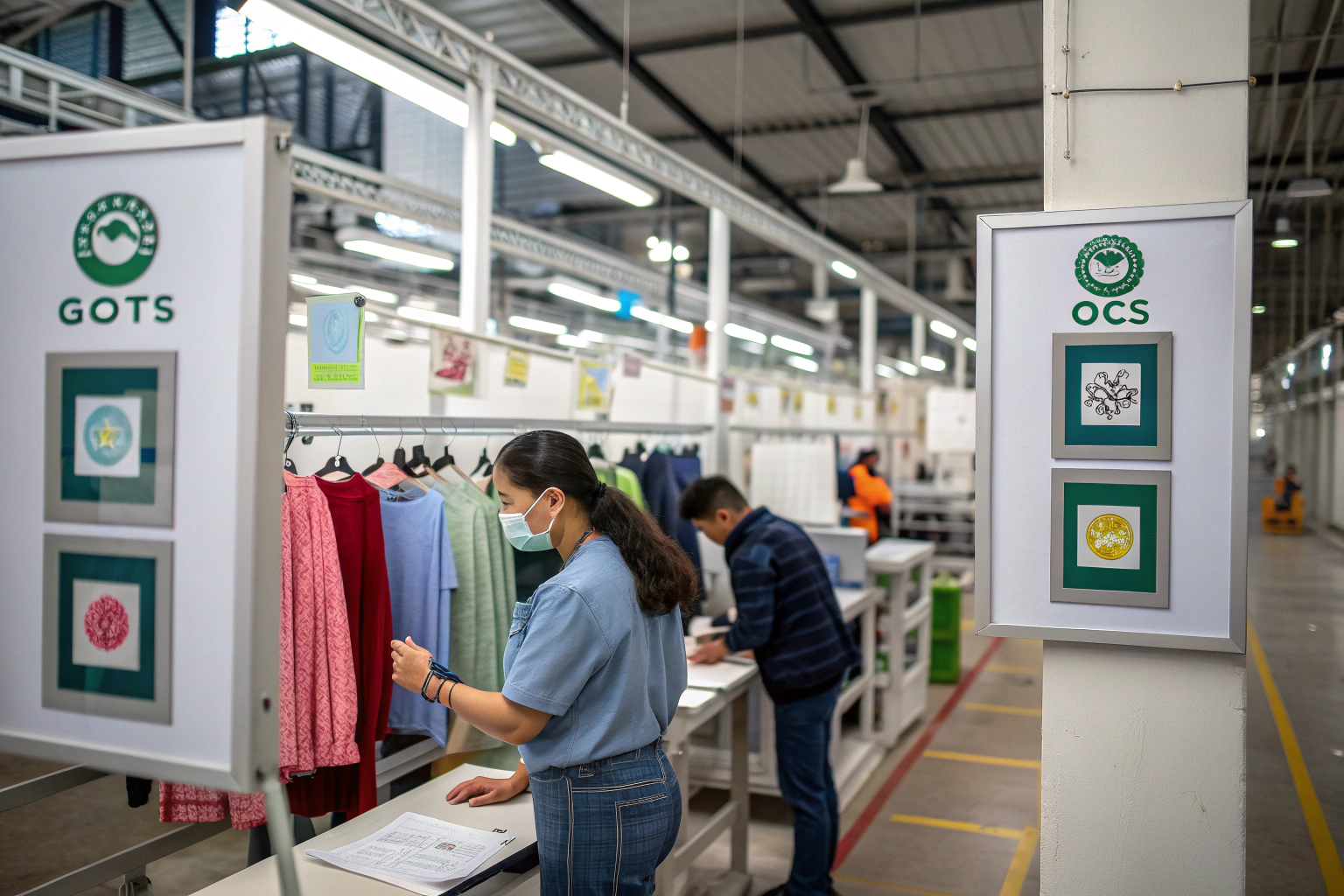
The most important certifications for a carbon-neutral kids’ clothing factory include the Global Organic Textile Standard (GOTS) for material processing, the Organic Content Standard (OCS) for tracking organic raw materials, and ISO 14001 for environmental management systems. Additionally, look for specific carbon-neutral certifications verified by third parties, which audit the factory’s total carbon footprint and its offsetting initiatives. These certifications provide a framework that ensures every step of the production process, from raw material to finished garment, adheres to strict environmental criteria.

How do I verify the authenticity of a factory’s sustainability certifications?
Verifying a certification’s authenticity is straightforward but essential. First, ask the factory for the certificate’s unique license number and the name of the certification body. Then, visit the official website of the standard (like the GOTS public database) and search using the provided details. This will confirm the certificate’s current status, scope, and validity period. Be wary of factories that only show you a PDF without a verifiable number. We at Fumao Clothing encourage all potential partners to verify our credentials this way. It builds immediate trust. Furthermore, you can request the full audit report, which details the specific criteria the factory met. Reputable factories that have nothing to hide will provide this documentation. This due diligence protects your brand from associating with false claims. The Federal Trade Commission’s Green Guides offer valuable advice on evaluating environmental marketing claims.
What is the difference between carbon-neutral and using sustainable materials?
This is a crucial distinction. Using sustainable materials, like organic cotton or recycled polyester, is one component of a broader sustainability strategy. It focuses primarily on the input—the raw materials. Carbon neutrality, however, addresses the entire manufacturing process’s environmental impact. A factory can use organic cotton but still have a large carbon footprint from energy-intensive dyeing processes or inefficient machinery. A carbon-neutral factory measures its total greenhouse gas emissions (from energy use, transportation, etc.) and then reduces them where possible. Any remaining emissions are offset through verified carbon offset projects. Therefore, a true partner will demonstrate both sustainable material sourcing and a comprehensive plan for achieving carbon neutrality.
How to assess a factory’s carbon reduction practices beyond certificates?
Certificates are a starting point, but the real proof lies in the factory’s ongoing practices and investments. A certificate reflects a point in time, but continuous improvement shows a deep-seated commitment to sustainability. You need to look at the concrete actions the factory is taking to minimize its environmental impact day after day.
Assessing a factory’s carbon reduction practices involves examining its energy sources, waste management systems, water recycling capabilities, and supply chain logistics. Look for evidence of investments in renewable energy, such as solar panels, and processes designed to minimize waste at every stage of production. A factory that is serious about carbon reduction will have measurable data on its energy consumption, water usage, and waste diversion rates, and will be able to show a year-over-year trend of improvement.

What questions should I ask about a factory’s energy consumption?
Direct questions are your best tool. Ask for the percentage of their total energy that comes from renewable sources. Inquire if they have conducted a recent energy audit and what specific efficiency measures were implemented as a result—for example, upgrading to LED lighting or installing high-efficiency motors on sewing machines. Ask how they track and reduce energy use in the most energy-intensive areas, like fabric cutting and dyeing. At our factory, we proudly detail our shift to a more sustainable energy mix and the resulting reduction in our carbon footprint. Their answers will reveal their level of sophistication and commitment. Vague responses are a red flag.
How can I evaluate their supply chain transparency?
A factory’s carbon footprint is not just about its own operations but also its suppliers. Ask for a map of their supply chain, especially for key raw materials like fabrics and dyes. Do they source from mills that also have environmental certifications? Can they provide evidence of low-carbon transportation choices, such as sea freight over air freight? A transparent factory will see this as a collaborative effort. They should be willing to introduce you to their key suppliers. This level of transparency ensures that your product’s sustainability is genuine from start to finish, aligning with best practices for sustainable supply chain management.
What are the cost implications of choosing a carbon-neutral factory?
A common concern for brand owners is the potential cost increase associated with carbon-neutral manufacturing. It’s true that implementing sustainable technologies and processes requires investment. However, a modern, efficient factory often turns these investments into long-term savings that can be shared with you, the client.
The initial cost of producing garments in a carbon-neutral factory can be 10-20% higher due to investments in clean technology and certified materials. However, this is often offset by the factory’s operational efficiencies, the growing market premium for sustainable products, and the mitigation of risks associated with non-compliance with future environmental regulations. Furthermore, many factories, including ours, absorb a significant portion of these costs through internal efficiency gains.

Will choosing a carbon-neutral factory significantly increase my FOB price?
Not necessarily as much as you might think. While sustainable materials like organic cotton have a higher raw cost, an efficient carbon-neutral factory often has lower operating costs due to energy savings and waste reduction. These efficiencies can partially balance the equation. The key is to discuss this openly with your potential supplier. Ask for a detailed cost breakdown. At Fumao, we work with clients to find a balance, perhaps by suggesting a product mix or optimizing order quantities. The final FOB price should reflect value, not just cost. A slightly higher FOB price can lead to a much stronger marketing story and higher retail margins for your brand.
How does carbon-neutral production affect lead times?
Generally, it does not negatively affect lead times. In fact, factories that have invested in modern, energy-efficient machinery often experience more stable and predictable production cycles. However, sourcing certified sustainable fabrics might require longer lead times for raw materials, as the supply chain is more specialized. This needs to be planned for during the development stage. An experienced factory will have established relationships with certified mills and can factor this into the timeline accurately. Proper lead time management is a hallmark of a professional supplier, carbon-neutral or not.
How to ensure the factory maintains its standards long-term?
Finding a carbon-neutral factory is a major achievement, but ensuring it maintains and improves its standards over the life of your partnership is equally important. Your brand’s reputation is tied to your supplier’s ongoing performance. Therefore, you need a partner committed to continuous improvement, not one that views certification as a final destination.
Ensuring long-term adherence to carbon-neutral standards requires a partnership approach. This includes establishing clear Key Performance Indicators (KPIs) in your contract, scheduling regular third-party audit reviews, and maintaining open communication about your evolving sustainability goals. A proactive factory will welcome this engagement and provide you with annual sustainability reports that track their progress against targets.

What should be included in a contract regarding sustainability?
Your contract should be specific. Instead of vague language like "must be sustainable," include clauses that require the factory to maintain its specific certifications (e.g., GOTS, ISO 14001) for the duration of the agreement. It should mandate an annual report on key environmental metrics, such as energy consumption, water usage, and waste generation. You can also include a right to audit clause, allowing you or a third party to verify compliance. This formalizes the commitment and protects your brand. For more on this, see resources on creating sustainable procurement agreements.
How can we work together on continuous improvement?
View your factory as a strategic partner. Share your brand’s long-term sustainability roadmap with them. Discuss innovations, such as new recycled materials or packaging reductions. At Fumao, we have dedicated account managers who act as sustainability liaisons for our clients. We jointly set annual goals for reducing the carbon footprint of the products we make for them. This collaborative approach, focused on continuous improvement, turns a transactional supplier relationship into a valuable strategic alliance that drives value for both parties.
Conclusion
Finding a genuine carbon-neutral kids clothing factory is a detailed process that goes beyond simply checking for a certificate. It requires a deep dive into certifications, operational practices, cost structures, and a commitment to long-term partnership. By asking the right questions and demanding transparency, you can partner with a manufacturer that aligns with your brand’s values and market demands. This partnership not only future-proofs your supply chain but also builds a powerful narrative for your customers.
Partnering with a factory that has already invested in a sustainable future saves you the time and resource of having to manage this complex transition yourself. If you are ready to explore a manufacturing partnership with a Chinese factory dedicated to carbon-neutral production for children’s wear, we invite you to contact us. Reach out to our Business Director, Elaine, at elaine@fumaoclothing.com to discuss how we can help you create high-quality, sustainable clothing for your brand.