
As environmental concerns about plastic pollution and resource depletion grow, industries are increasingly turning to plant-based packaging as a sustainable alternative to traditional plastic. Plant-based materials such as those made from corn, sugarcane, rice husks, mushrooms, and seaweed promise a greener solution for packaging. But as businesses look to adopt these materials, a crucial question remains: Are plant-based packaging materials durable enough to replace conventional options?
In this article, we’ll explore the durability of various plant-based packaging materials, their potential advantages, and limitations. We’ll cover a wide range of plant-based materials—including Polylactic Acid (PLA), paper, mushroom-based packaging, seaweed-based films, and rice husk packaging—to help you understand how they stack up against traditional packaging solutions.
The Demand for Sustainable Packaging
The shift toward sustainable packaging has been driven by a range of factors, including the increasing environmental impact of traditional plastic, the depletion of non-renewable resources, and growing consumer demand for eco-friendly products. Plastics, which take hundreds of years to decompose, are a major contributor to global pollution, particularly in oceans and landfills. In response, companies are seeking more sustainable alternatives that not only reduce waste but also offer similar, if not better, durability and functionality compared to traditional plastics.
Plant-based packaging offers numerous environmental benefits, such as being biodegradable, compostable, and made from renewable resources. But when it comes to replacing conventional packaging, such as plastic wraps, bottles, or corrugated boxes, the durability of plant-based materials is a key factor that determines their viability.

Durability of PLA Packaging
PLA packaging is relatively strong compared to paper-based alternatives, but it has several drawbacks when it comes to high-performance applications.
- Heat Sensitivity: PLA begins to soften at around 50°C (122°F), making it unsuitable for hot food packaging or containers that need to withstand heat. This heat sensitivity makes it less durable in environments that involve high temperatures, such as microwaves or hot beverage containers.
- Impact Resistance: PLA is more brittle than petroleum-based plastics, making it prone to cracking or breaking when subjected to impact. This limits its application for fragile or heavy-duty items.
- Moisture Sensitivity: PLA is biodegradable and decomposes over time when exposed to moisture, which means it may not be ideal for packaging items that need to be stored in humid conditions or for long-term use.
Applications of PLA Packaging
PLA packaging is best suited for short-term applications such as disposable food containers, cups, and cutlery. While it’s an eco-friendly alternative, its limitations in heat resistance and moisture sensitivity mean it is not a perfect substitute for all types of packaging.
Paper-Based Packaging: Sustainable but Vulnerable to Moisture
Paper-based packaging is one of the most widely used plant-based packaging materials. It is biodegradable, recyclable, and often made from renewable resources like wood pulp or recycled paper fibers. Paper packaging is commonly used for food packaging, shipping boxes, and retail packaging.

Durability of Paper-Based Packaging
While paper packaging offers great environmental benefits, it is not as durable as some other packaging materials when exposed to certain conditions.
- Moisture Sensitivity: Paper absorbs moisture easily, which weakens its structural integrity. When exposed to water, paper can tear, warp, or lose its shape. This limits its use in wet or refrigerated environments unless treated with moisture-resistant coatings.
- Strength: Paper and cardboard offer a decent level of strength for lightweight products. However, they are not as resilient under heavy pressure or impact as plastic or more durable plant-based options.
- Environmental Benefits: Paper packaging is biodegradable and can be recycled, but its environmental impact depends on the source and whether it is treated with non-biodegradable coatings or chemicals.
Applications of Paper-Based Packaging
Paper-based packaging is ideal for dry goods and lightweight applications. It is commonly used in food packaging, take-out containers, and shipping boxes. For products that require protection from moisture, additional treatments like coatings or lamination are needed to improve the material’s durability.
Mushroom Packaging: Biodegradable and Strong
Mushroom packaging is a highly innovative material made from mycelium (the root structure of fungi) and agricultural waste such as rice husks or corn stalks. It offers a biodegradable and compostable alternative to Styrofoam and other plastic foams. It’s used in industries such as electronics and packaging for fragile items.

Durability of Mushroom Packaging
Mushroom packaging provides an excellent level of durability for certain applications, but its performance varies depending on the product and the environment in which it is used.
- Impact Resistance: Mushroom packaging offers good cushioning and protection for fragile products. It is similar to Styrofoam in terms of impact resistance but has the added benefit of being biodegradable and compostable.
- Moisture Sensitivity: While mushroom packaging is somewhat resistant to moisture, prolonged exposure to high humidity or direct water contact can cause it to degrade. This limits its use for products that require moisture protection over extended periods.
- Biodegradability: Mushroom packaging decomposes quickly in composting environments, making it a highly sustainable option. It breaks down into natural components, unlike plastic foam, which can take hundreds of years to degrade.
Applications of Mushroom Packaging
Mushroom packaging is primarily used for cushioning fragile items, such as electronics, glass, or ceramics. It is an environmentally friendly alternative to Styrofoam and is being adopted by companies looking to reduce plastic waste in packaging.
Seaweed-Based Packaging: Sustainable and Lightweight
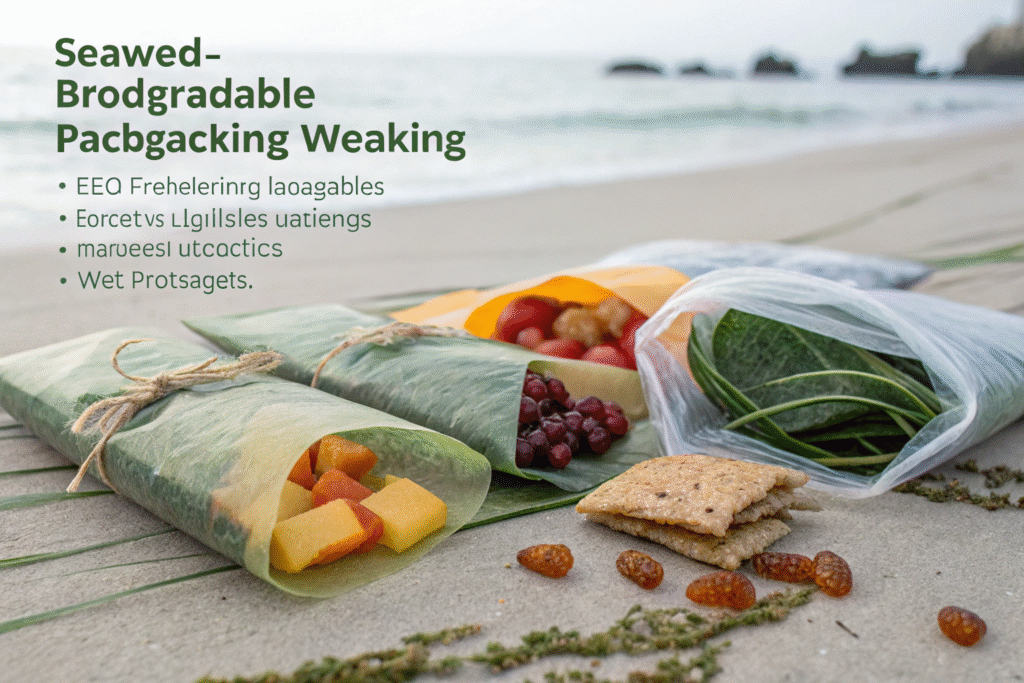
Seaweed-based packaging is another sustainable alternative that has gained attention in recent years. Made from edible seaweed, this material is biodegradable, compostable, and even edible in some cases. It’s commonly used in the food industry and for small, lightweight packaging.
Durability of Seaweed-Based Packaging
While seaweed packaging is eco-friendly, its durability is not as high as some other materials, especially in wet conditions.
- Moisture Sensitivity: Seaweed-based packaging is highly sensitive to moisture and breaks down when exposed to water for extended periods. This limits its durability in wet conditions or for long-term use.
- Strength and Flexibility: Seaweed-based materials are lightweight and flexible, but they lack the structural strength of more robust plant-based materials like rice husk or mushroom packaging.
- Biodegradability: Seaweed packaging is fully biodegradable and compostable, making it a sustainable choice for single-use applications. Its rapid breakdown reduces landfill waste, but its moisture sensitivity limits its broader use.
Applications of Seaweed-Based Packaging
Seaweed-based packaging is best suited for lightweight products or short-term uses, such as snack wraps, small food containers, and packaging for dry foods. Its rapid biodegradability makes it ideal for applications where waste reduction is a priority.
Rice Husk Packaging: A Strong and Water-Resistant Option
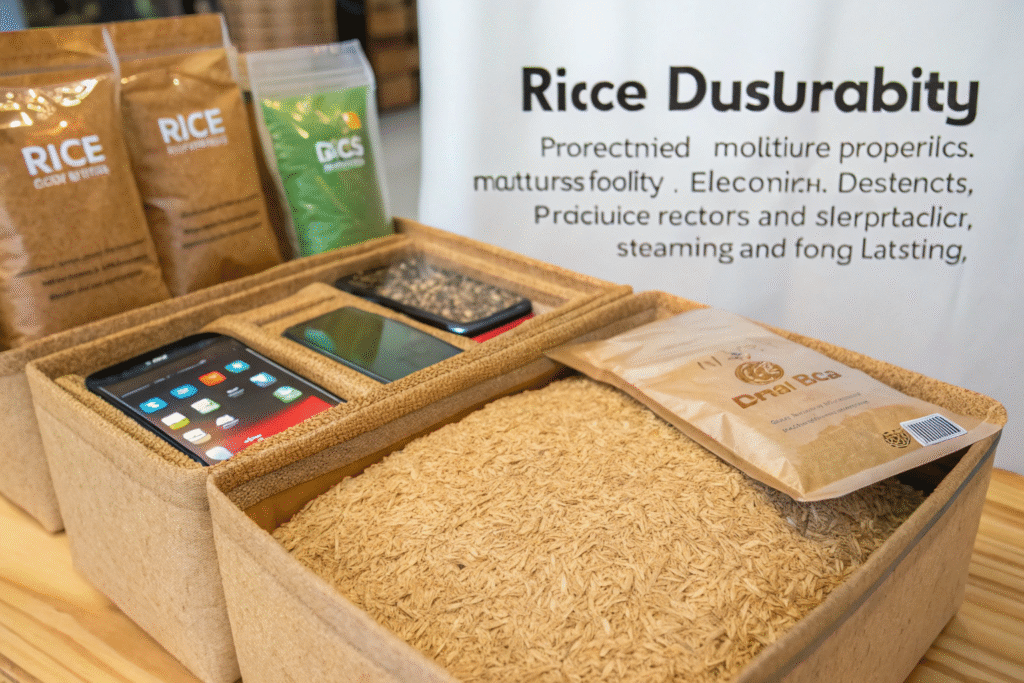
Rice husk packaging is made from the outer shell of rice grains, an agricultural byproduct that is often discarded. Rice husk packaging is durable, moisture-resistant, and provides excellent protection for products that require both strength and moisture protection.
Durability of Rice Husk Packaging
Rice husk packaging offers high durability and is resistant to moisture, making it a strong contender for various packaging applications.
- Impact Resistance: Rice husk packaging is highly resistant to impact and provides reliable protection for fragile products, much like foam-based packaging.
- Moisture Resistance: Unlike paper and PLA, rice husk packaging is naturally resistant to moisture. It can withstand exposure to humidity or moisture without breaking down, making it suitable for products in humid environments.
- Strength: Rice husk packaging offers the same strength and durability as conventional packaging materials, such as plastic or foam, while remaining biodegradable.
Applications of Rice Husk Packaging
Rice husk packaging is commonly used in shipping boxes, food containers, and other lightweight product packaging. It offers a sustainable, durable alternative to plastic packaging, especially for products that require moisture resistance or need protection from impact.
Conclusion
Plant-based packaging materials offer a sustainable alternative to traditional plastics, providing many benefits, including biodegradability, compostability, and reduced environmental impact. However, their durability varies significantly depending on the material. PLA, seaweed, and paper-based materials are suitable for short-term or single-use applications, but they may not be durable enough for long-term or heavy-duty use. Mushroom packaging and rice husk materials provide greater impact resistance and moisture resistance, making them ideal for more demanding packaging needs.
As technology and innovation continue to evolve, the durability of plant-based materials is expected to improve, allowing them to replace traditional plastics in more industries. Businesses looking to reduce their carbon footprint can find durable, eco-friendly packaging solutions by considering plant-based alternatives, though they must also weigh factors like moisture resistance, strength, and the specific needs of their products.