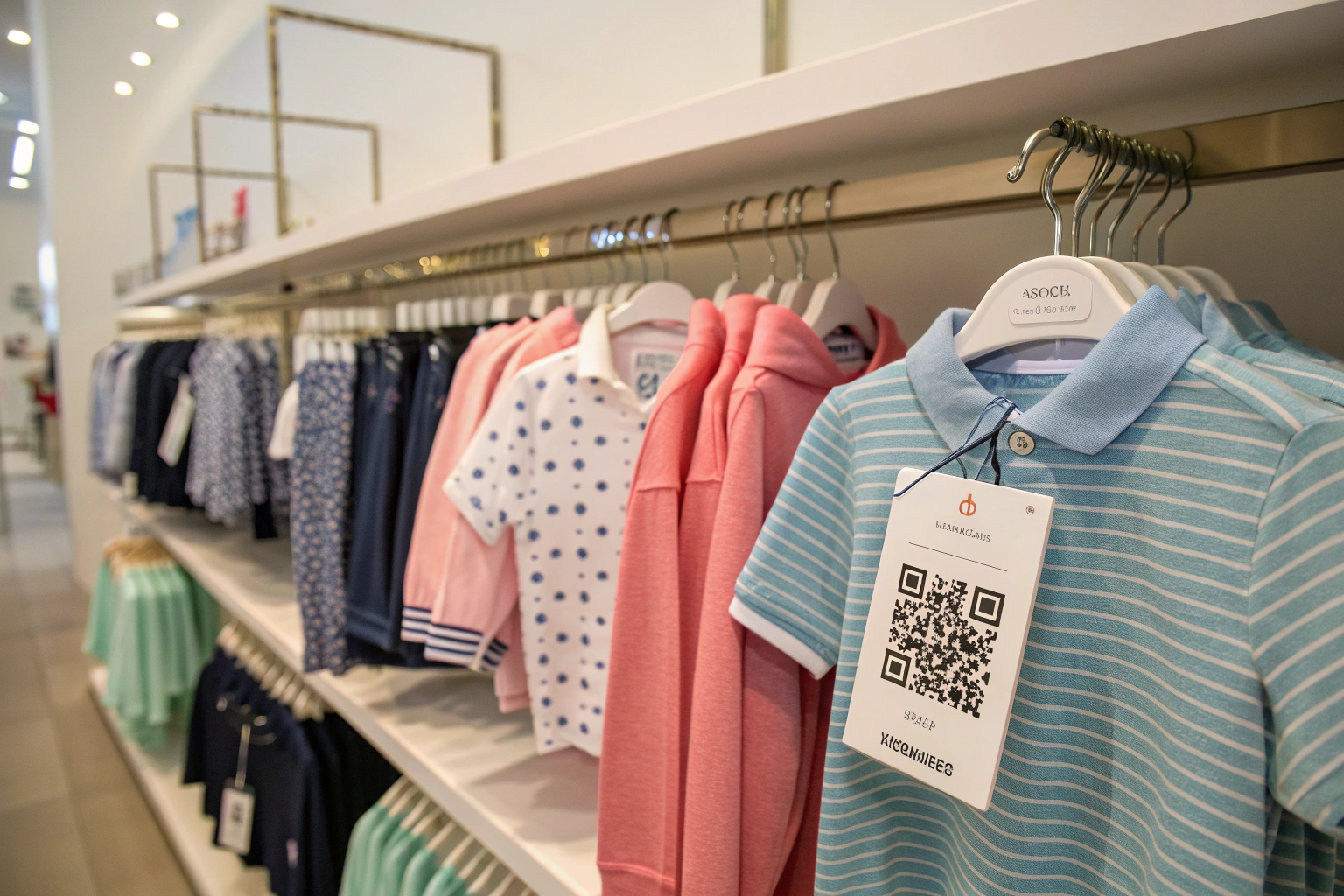
In recent years, QR codes have appeared widely on apparel labels, offering buyers instant access to a variety of information through a quick smartphone scan. Within the children’s wear market—where safety, trust, and material quality remain top priorities—these digital labels are especially valuable. Unlike traditional paper tags, they allow brands to present detailed product data without crowding limited physical space.
QR-enabled labels assist consumers by strengthening transparency, building interactive connections with brands, and providing quick access to certifications, care details, or authenticity checks. This ease of use enhances the shopping process and reinforces brand credibility.
How do QR codes increase visibility of product details?
Scanning a QR tag often reveals information not visible on standard care labels.

What content can be displayed?
- Fiber and process data: Information on materials used, dyeing methods, and eco-labels.
- Certifications: Direct digital confirmation of OEKO-TEX® or GOTS.
- Supply chain transparency: Insight into sourcing locations and ethical production practices.
Why is this important to parents?
Parents expect clothing for children to be safe and responsibly made. QR codes provide reassurance by allowing them to validate claims instantly, rather than relying on promotional text alone.
How do QR labels strengthen customer interaction?
By turning a static label into a digital platform, QR codes enrich engagement.

What kinds of interaction are offered?
- Instructional media: Easy access to videos with wash or care tips.
- Style suggestions: Digital guides showing how garments can be combined.
- Promotional campaigns: Loyalty benefits and discounts linked directly to scans.
Why is this meaningful for brands?
A report from Forbes indicates that interactive packaging increases consumer loyalty. Parents, often pressed for time, find QR-driven support convenient, while brands benefit from stronger trust and recognition.
Can QR systems help confirm authenticity?
Product counterfeiting remains a challenge, and QR labels are being used as a response.

How does the verification process function?
Each garment may carry a unique code linked to the brand’s server or even blockchain records, confirming authenticity and discouraging counterfeit distribution.
Why is this essential in babywear?
Unauthorized goods might bypass safety checks or use harmful materials. Verification through QR scanning allows parents to confirm that their purchase complies with safety regulations. GS1 has identified QR-linked verification as an important tool for fraud prevention.
How do QR codes simplify care instructions and sustainability awareness?
Digital labels give clearer, more detailed guidance than small printed tags.

What functions are included?
- Expanded washing directions: Illustrated steps or video guides.
- Sustainability information: Data on carbon emissions or water savings.
- Circularity advice: Guidance on garment recycling or donation options.
Why is this approach effective?
Printed care instructions are often cut off or overlooked. Digital access reduces confusion and ensures correct garment handling. Research from McKinsey notes that digital product passports are likely to become a standard across apparel supply chains.
Conclusion
QR code labels offer consumers distinct benefits by enhancing information access, interaction, product verification, and sustainable care practices. For families shopping children’s apparel, this translates into greater peace of mind and convenience.
At Shanghai Fumao, we incorporate QR-enabled solutions in our clothing production to reinforce transparency and build confidence. By combining smart technology with strict quality standards, we ensure both safety and brand value. For collaboration or tailored labeling solutions, contact our Business Director Elaine at elaine@fumaoclothing.com.