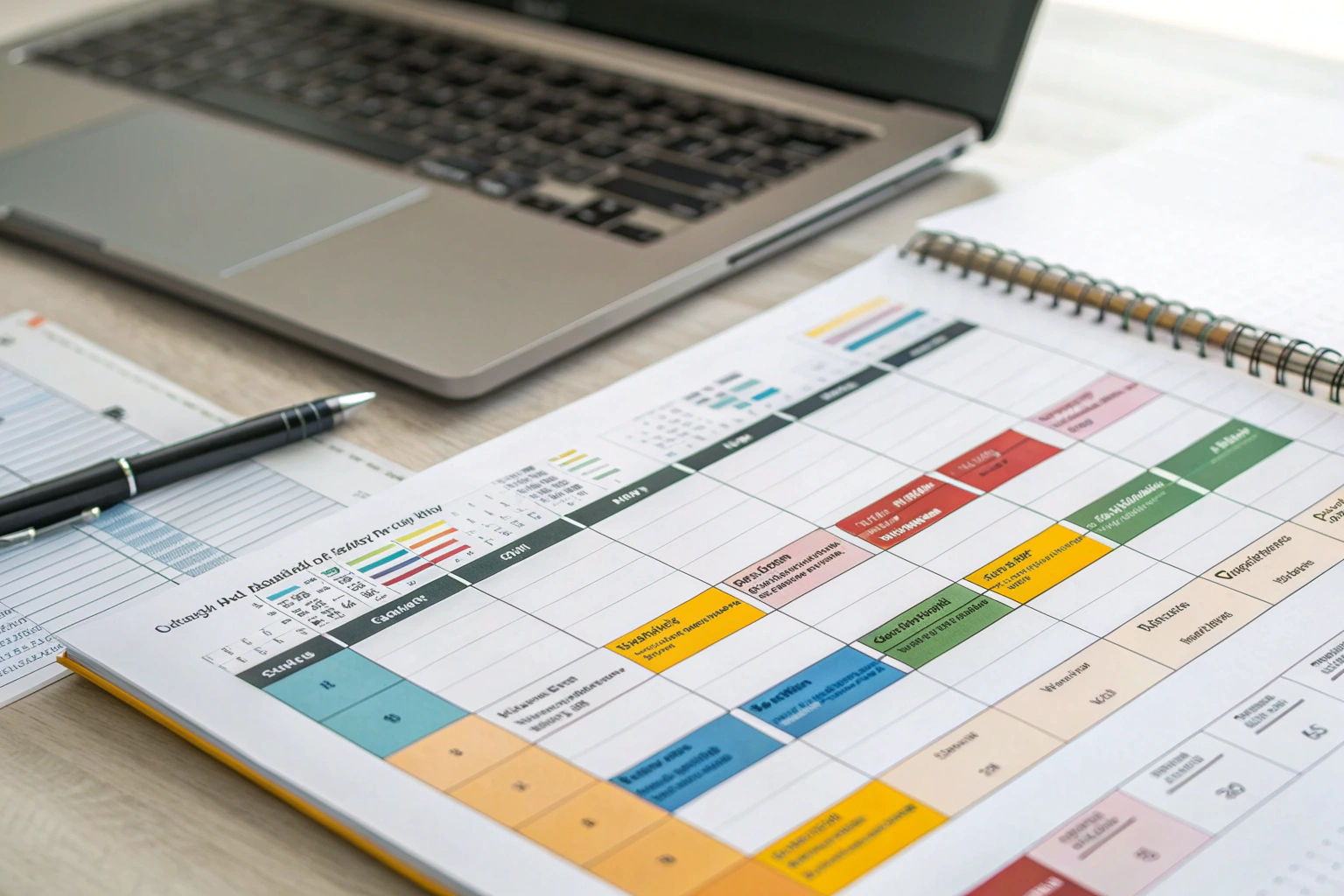
Planning is the hidden engine behind every successful clothing collection. Without a structured calendar, even the most creative brands face late deliveries, unsold stock, or compliance failures. For children’s wear, timing is even more crucial because parents shop by season, and missed launches mean lost sales.
The best clothing production calendars combine speed, cost control, and risk management to ensure collections arrive on time for seasonal launches.
As a factory owner working closely with US and European buyers, I have seen how production calendars make or break entire seasons. Let’s explore why they matter, how they work, and which calendar styles fit different types of apparel businesses.
Why are clothing production calendars essential?
A clothing production calendar is more than a timeline; it is the foundation of an apparel supply chain. When deadlines slip, production halts, and shipping delays, brands lose their market windows.
Production calendars align design, sourcing, and manufacturing with market needs, helping brands reduce risk and stay competitive.

Formal tone
Production calendars are critical tools that ensure design, sourcing, and manufacturing progress in sequence. They minimize delays and safeguard seasonal alignment.
Persuasive tone
Without a calendar, you gamble with your entire season. With one, you protect deadlines, cut risks, and give your brand the edge it needs.
Casual tone
Think of a production calendar like your season’s roadmap—it keeps everyone on track so you don’t end up late or stuck with the wrong stock.
What does a standard clothing production calendar look like?
Most global brands follow a 6–9 month production calendar. It starts with design and sourcing and ends with delivery to retail stores. Each stage depends on the previous one, so timing must be exact.
A standard calendar runs 8–9 months before delivery, covering design, sample approvals, bulk production, and logistics.
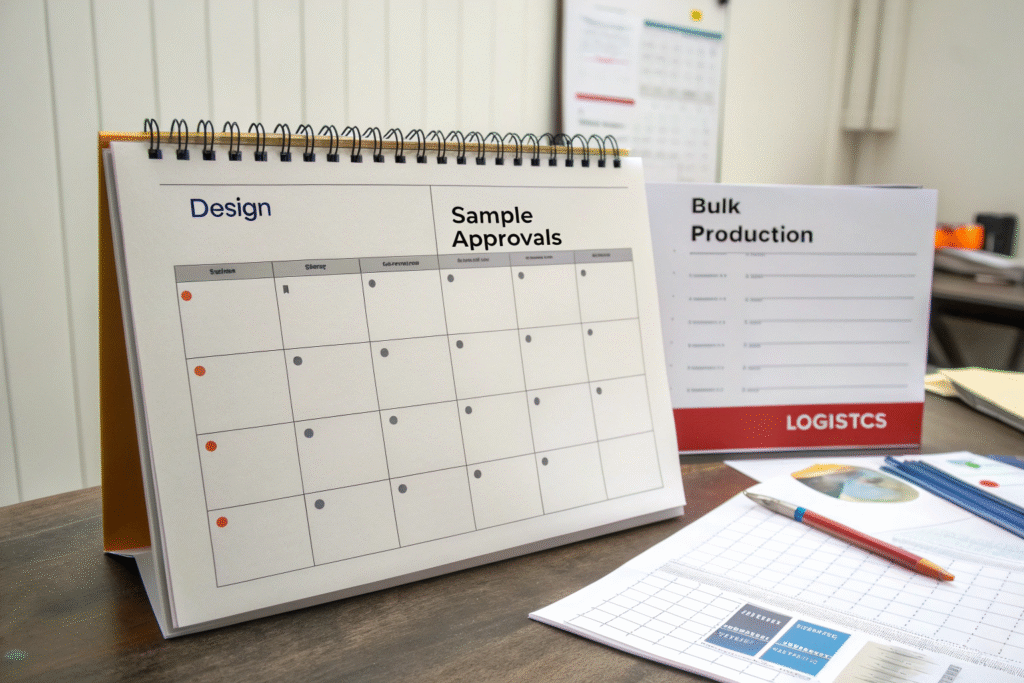
Key stages overview
| Stage | Timeline (Before Delivery) | Tasks |
|---|---|---|
| Concept & Design | 8–9 months | Research, tech packs |
| Fabric & Trim Sourcing | 7–8 months | Confirm suppliers, testing |
| Proto Samples | 6–7 months | First fit approvals |
| Sales Samples | 5–6 months | For buyers, trade shows |
| Pre-Production | 4–5 months | Final fit, color approvals |
| Bulk Production | 3–4 months | Cutting, sewing, QC |
| Shipping | 1–2 months | Sea or air freight |
| Delivery | 0 | Launch in stores or online |
Formal tone
A structured calendar establishes fixed milestones, allowing teams to manage workflows with precision and accountability.
Persuasive tone
This calendar isn’t just a schedule—it’s your guarantee that collections hit the racks exactly when customers are ready to buy.
Casual tone
It’s like a countdown clock—every step’s planned so your clothes show up right on time for the season.
What types of production calendars exist?
Not all brands work on the same timeline. Luxury brands, fast fashion retailers, and small to medium enterprises all use different calendars.
The three main calendar types are traditional seasonal, fast fashion, and hybrid models.
Traditional calendar
- Formal: Used by luxury brands with 8–12 month cycles to allow for craftsmanship and exclusive launches.
- Persuasive: Traditional calendars give prestige brands time to perfect every stitch, ensuring premium quality.
- Casual: High-end labels take their time—up to a year—to get every detail right before launch.
Fast fashion calendar
- Formal: Runs on cycles as short as 3–6 weeks, supported by nearshoring and rapid design processes.
- Persuasive: Fast fashion proves that speed sells—brands capture trends in weeks, not months.
- Casual: Think Zara or Shein—they can spot a trend and have it in stores in a month.
Hybrid calendar
- Formal: A 4–6 month approach combining digital sampling with flexible sourcing strategies.
- Persuasive: The hybrid model lets you move fast without breaking budgets—ideal for SMEs.
- Casual: It’s the middle path—quick enough to compete but still realistic for smaller brands.
What are best practices for production calendars?
Having a calendar is not enough; how you manage it determines success.
Best practices include digital sampling, adding buffers, parallel sourcing, and consistent communication.

Formal tone
Adopting digital sampling, allocating buffer periods, initiating sourcing concurrently, and maintaining regular communication are recommended practices.
Persuasive tone
Speed up with digital samples, protect your season with buffers, and lock in success with weekly check-ins—these are the practices that win.
Casual tone
Use digital samples to save time, add a little buffer so delays don’t hurt, and just check in often with your team and factory.
Conclusion
Clothing production calendars are not one-size-fits-all. Luxury brands benefit from traditional models, fast fashion thrives on speed, and SMEs gain flexibility with hybrid calendars. Regardless of the type, the best calendars ensure on-time launches, cost savings, and fewer risks.
At Shanghai Fumao, we follow structured calendars to support children’s wear buyers with reliable quality and timely delivery. If you want a partner who can manage your production calendar with precision and flexibility, contact our Business Director Elaine at elaine@fumaoclothing.com. Together, we can build a plan that keeps your brand ahead of the season.